
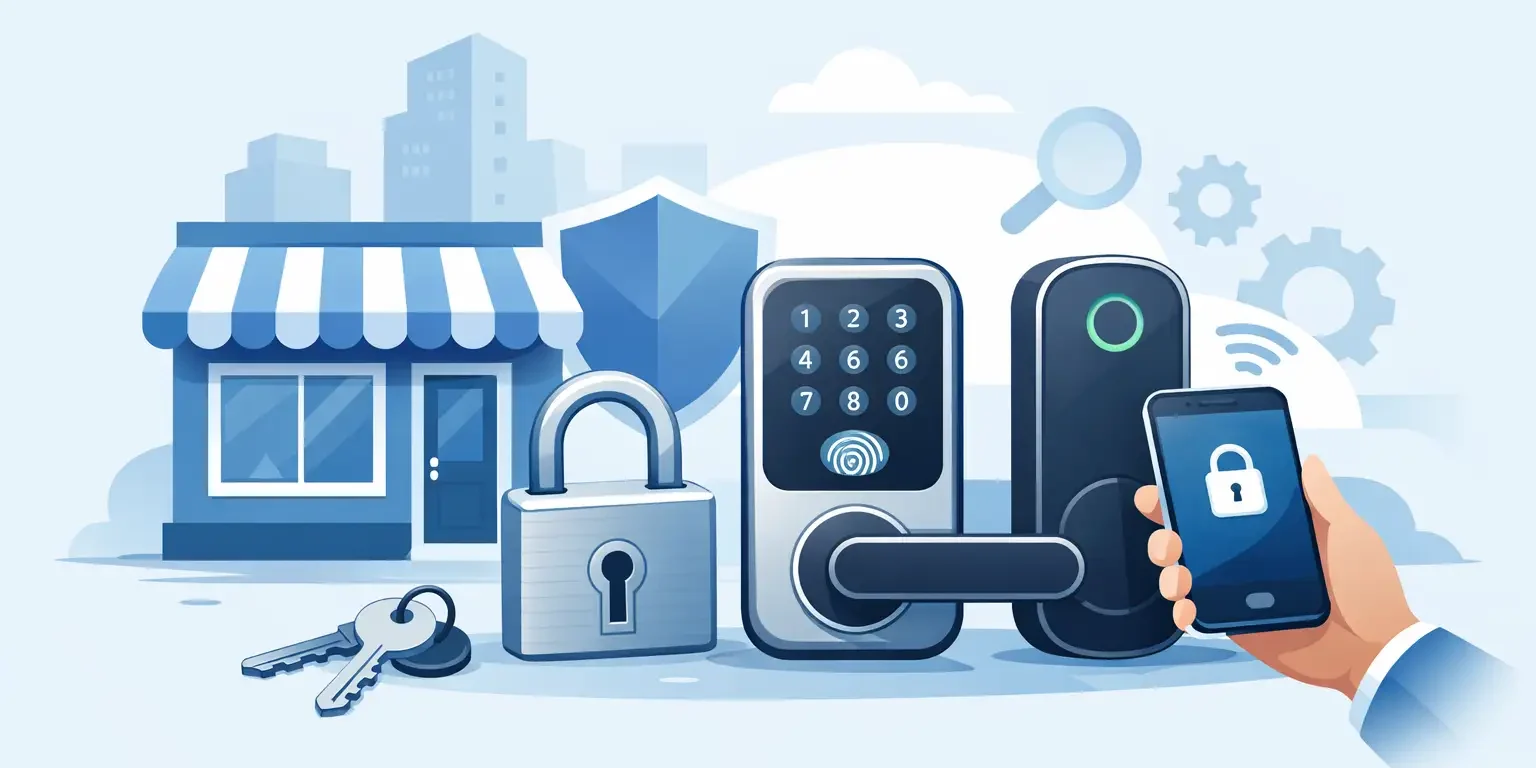
A storefront can have a good alarm, cameras, and bright exterior lighting, yet still be vulnerable at the door. Many break-ins happen because the lock, door frame, or key control system was never designed for commercial daily use. The best locks for small business protect your entry points without slowing down employees, customers, or your daily operations.
For a restaurant, retail shop, office, warehouse, or rental property, the right choice depends on the door itself, the number of users, who needs access, and how quickly access needs to change. A basic residential lock may seem like a budget-friendly fix, but it often wears down quickly under commercial traffic and offers limited control when keys are lost or employees leave.
Start With the Door, Not Just the Lock
A quality lock cannot compensate for a weak door, damaged frame, or loose strike plate. Before choosing hardware, inspect the complete opening. Look for gaps around the door, worn hinges, loose mounting screws, cracked wood around the latch, and a strike plate attached with short screws.
Exterior doors at a business should generally use commercial-grade hardware matched to the door material and function. A glass aluminum storefront door needs different hardware than a solid steel service door. A rear employee entrance may need stronger access control than a customer-facing front door that remains open during business hours.
The lock should also meet fire and life-safety requirements. Exit doors often need panic hardware that lets people leave quickly without a key, code, or special knowledge. Adding the wrong deadbolt to an exit door can create a serious safety issue and may violate local building requirements. A professional locksmith can assess the door and recommend compatible hardware before installation.
Best Locks for Small Business by Security Need
There is no single lock that fits every small business. Most well-protected locations use a combination of mechanical locks, controlled key systems, and electronic access where it makes sense.
Commercial deadbolts for solid exterior doors
A commercial-grade deadbolt remains one of the most practical choices for a solid front, rear, or storage-room door. Choose a deadbolt designed for commercial use rather than a lightweight residential model. The bolt should extend securely into a reinforced strike plate, and the hardware should be installed with long screws that reach the wall framing where appropriate.
Deadbolts work well for businesses with a small, stable team and straightforward hours. They are dependable, familiar, and do not require batteries, Wi-Fi, or app management. The trade-off is key control. If an employee loses a key or does not return one after leaving, rekeying may be necessary to restore confidence in the property’s security.
For back doors and service entrances, a deadbolt can be paired with a commercial lever or latch set. This arrangement gives employees a convenient handle while adding a separate, stronger locking point when the business is closed.
Commercial lever locks for daily traffic
A commercial lever lock is often the right fit for office suites, interior rooms, employee entrances, and doors that see frequent use. Levers are easier to operate than knobs, especially when employees are carrying supplies, files, or equipment. They can also be configured so the exterior stays locked while the inside allows free exit.
Look for commercial-grade lever hardware with a durable finish and a lock function that matches the room. An office may need a passage lever during the day and a keyed lock after hours. A supply closet may need restricted access all day. A restroom or staff area has different privacy and safety needs.
The function matters as much as the brand. Installing the wrong function can lead to locked-out employees, unsecured rooms, or an exit door that does not operate as intended.
Keypad and smart locks for changing staff access
Keypad locks and electronic smart locks can be a strong option for businesses that regularly add, remove, or rotate employees. Instead of collecting physical keys from every former worker, you can delete an individual code or credential. This is especially useful for salons, small medical offices, cleaning crews, short-term rental managers, and businesses with shift-based staff.
A keypad lock is often simpler than a fully connected smart lock. It allows code-based entry without requiring every employee to carry a key, while still offering a familiar lock-and-door setup. Some models can be managed at the door, while others allow mobile management and access records.
Connected smart locks offer more flexibility, but they also require good planning. Battery replacement, user permissions, internet reliability, and emergency override access all need to be considered. A smart lock should not leave you unable to enter your own business because a battery died or a manager changed a setting without a backup plan.
For many small businesses, a keypad lock on the employee entrance combined with a mechanical commercial lock on the main entrance is a balanced approach. It keeps day-to-day access simple while preserving dependable backup security.
Restricted keyways and master key systems
If several employees, managers, vendors, or tenants need different levels of access, a master key system can reduce a ring full of keys without giving everyone access to every door. An employee’s key might open the front entrance and break room, while a manager’s key also opens the office, cash room, and storage area.
Restricted keyways add another layer of control. These keys are harder to duplicate without authorization, which helps business owners track who can obtain copies. This is valuable for businesses that handle cash, customer records, medication, tools, inventory, or sensitive equipment.
Master key systems need careful design. Too much convenience can create too much access. A good system separates doors by role, assigns only the access each person needs, and keeps a written record of who holds each key. When a key goes missing, a locksmith can advise whether rekeying one cylinder or updating a larger section of the system is the right response.
High-security locks for higher-risk areas
High-security cylinders and locks are worth considering for cash offices, server rooms, pharmacies, specialty inventory storage, and rear doors that are hidden from public view. These products may offer increased resistance to common forced-entry and manipulation methods, along with better key control.
They cost more than standard commercial hardware, so they are not always necessary on every interior door. Use them where the impact of unauthorized entry would be highest. A layered setup is often more cost-effective than putting premium hardware everywhere: reinforce the exterior doors, protect sensitive rooms, and maintain reliable locks throughout the building.
Do Not Overlook the Strike Plate and Door Frame
A lock is only as strong as the surface holding it. A heavy deadbolt mounted to a weak strike plate can still fail under force. Reinforced strike plates, longer mounting screws, properly aligned latches, and secure hinges are essential parts of commercial door security.
Misalignment is another common problem. If staff have to lift, pull, or slam the door to lock it, the hardware will wear out faster and may eventually fail. A locksmith can adjust the door, repair the frame area, and install hardware so the bolt enters the strike cleanly.
For outward-swinging doors, hinge security may also need attention. Non-removable hinge pins or security hinges can help reduce risk when the hinges are exposed outside.
When Rekeying Makes More Sense Than Replacing Locks
Lock replacement is not always the most affordable answer. If your existing commercial hardware is in good condition, rekeying can change the internal key combination without replacing the entire lock. It is a practical option after employee turnover, a lost key, a lease change, or a management transition.
Replacement makes more sense when hardware is damaged, outdated, difficult to operate, not commercial-grade, or incompatible with your current access needs. If you are moving from individual keys to a master key system or electronic access, replacement may be part of the upgrade.
A local locksmith can inspect the hardware and give you a direct recommendation based on its condition. At Locks R Us, that means helping business owners choose dependable products and installing them on-site with the door, frame, and daily workflow in mind.
Build a Lock Plan That Employees Can Follow
The strongest lock system can still fail when keys and codes are handled casually. Keep a simple access list that shows who has keys, codes, cards, or app permissions. Remove access immediately when someone leaves. Change shared keypad codes on a schedule and whenever there is a security concern.
Avoid leaving spare keys under mats, in unlocked desk drawers, or in predictable outdoor hiding places. If a vendor needs access, consider a time-limited code or a controlled key instead of sharing a manager’s key. Make sure at least two trusted people know the emergency access plan, including who to call if a lock fails after hours.
Your business does not need the most expensive hardware on every door. It needs locks that fit the risks you actually face, doors that are properly reinforced, and an access plan you can manage without confusion. A professional on-site assessment can turn that goal into practical, dependable protection before a lost key or damaged lock becomes an emergency.