
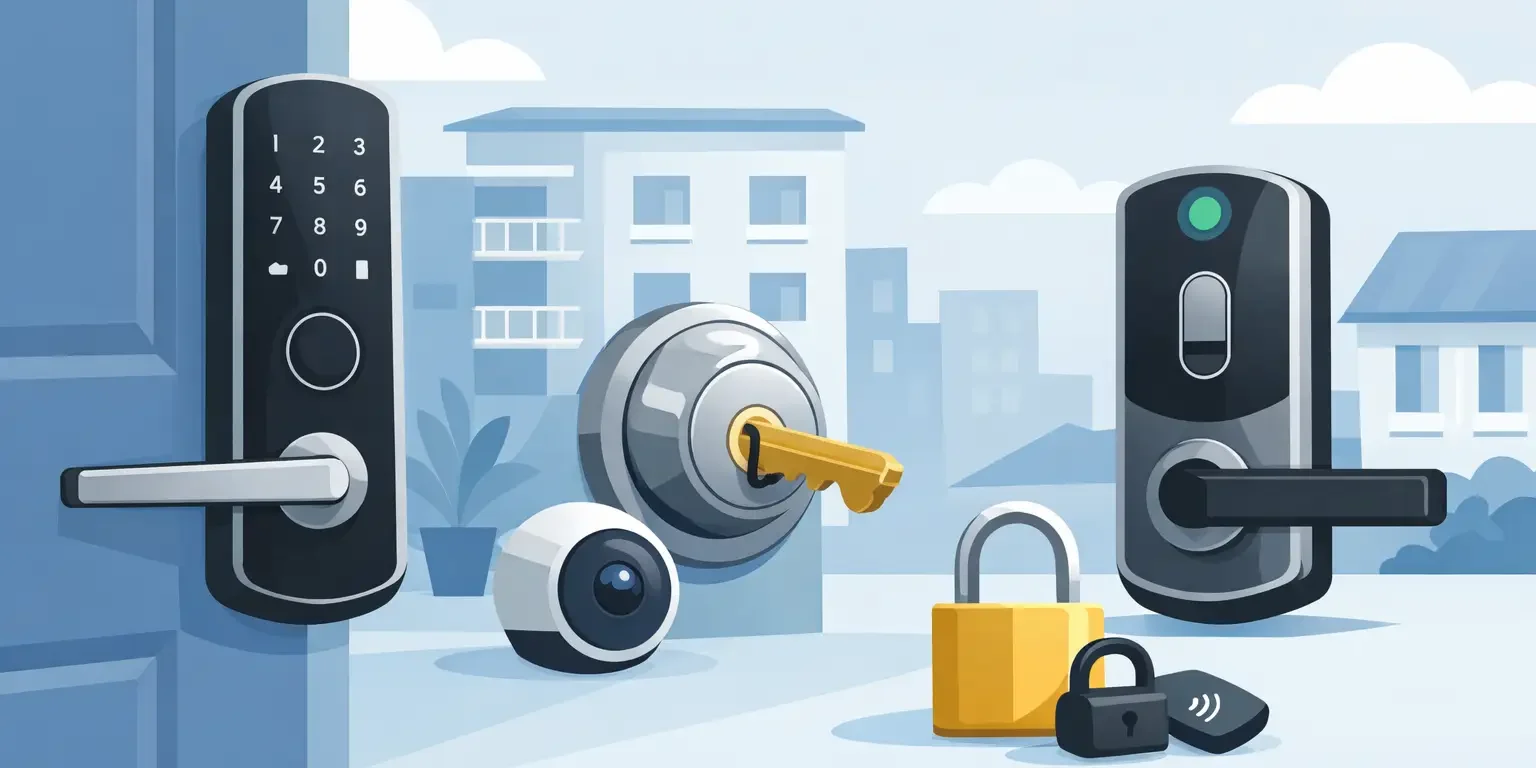
Apartment security usually comes down to one frustrating question – what can you actually change without creating problems with your lease? The best locks for apartments are the ones that improve day-to-day safety, fit your door correctly, and stay within your landlord or property manager’s rules. That means the right answer is not always the biggest lock or the newest smart device. It is the lock that works with your building, your routine, and your level of risk.
If you rent in Ballwin, St. Louis, or the surrounding area, this matters even more in older buildings where door alignment, worn frames, and basic hardware can make a decent lock perform badly. A good lock helps, but so do proper installation and honest advice about what your door can support.
What makes the best locks for apartments?
For apartment doors, security is only one part of the decision. You also have to think about lease restrictions, whether the existing door already has a deadbolt cutout, and whether management needs access in an emergency. Some renters want a simple key lock that feels stronger than builder-grade hardware. Others want keyless entry because they are tired of getting locked out or handing out spare keys.
The best apartment lock usually checks four boxes. It should resist forced entry better than a basic knob lock, fit a standard residential door, avoid unnecessary damage to the door or frame, and make sense for how you live. If you come and go with kids, groceries, or pets, convenience matters. If you live in a larger complex with frequent maintenance visits, access control matters too.
That is why there is no single best lock for every apartment. There are several strong options, and each one has trade-offs.
1. Single-cylinder deadbolts
For many renters, a standard single-cylinder deadbolt is still one of the best locks for apartments. It is familiar, dependable, and usually accepted by landlords when installed correctly. You lock and unlock it with a key from the outside and a thumb turn from the inside.
A quality deadbolt from a trusted brand is a major step up from relying on a spring latch in the knob alone. It gives better resistance against credit card bypass attempts and basic forced entry. If your apartment door already has a deadbolt opening, replacing a weak or worn deadbolt with a better one is often the most practical upgrade.
The trade-off is convenience. You still need a key, and if you lose it or move out, rekeying becomes part of the process. But for many tenants and property managers, this is the cleanest balance of cost, simplicity, and security.
2. Double-cylinder deadbolts
A double-cylinder deadbolt uses a key on both sides. Some people consider it for apartment doors with nearby glass because it can help prevent someone from breaking the glass and reaching in to turn the thumb latch.
This option can make sense in very specific layouts, but it is not always ideal for apartments. Local code requirements, fire safety concerns, and landlord rules may limit or prohibit it. In an emergency, needing a key to unlock the door from inside can slow you down.
That is why this is a case where stronger on paper does not always mean better in real life. Before installing one, it is smart to confirm building policy and safety requirements.
3. Smart deadbolts
Smart deadbolts are now one of the most requested apartment upgrades, and for good reason. They let you lock and unlock your door with a code, app, fingerprint, or a mix of those features depending on the model. If you are tired of carrying keys or want to create temporary codes for dog walkers, cleaners, or visiting family, this style offers real convenience.
For apartments, the best smart locks are usually retrofit-friendly or designed to fit standard deadbolt prep without major door modification. Some replace only the inside portion of the deadbolt and keep the exterior key cylinder. Others replace the whole unit.
The benefits are clear, but there are trade-offs. Battery maintenance matters. Wi-Fi features can be useful, but they also add setup steps and sometimes extra cost. Not every renter needs remote access. In many apartments, a simpler keypad model with no complicated smart home integration is the better choice because it is easier to use and easier to maintain.
4. Keypad locks
A keypad lock gives you keyless entry without forcing you into a full app-based system. For many apartment residents, that is the sweet spot. You punch in a code, get inside quickly, and avoid hiding spare keys under mats or planters.
This can be especially useful for households with teenagers, roommates, or regular service visits. Instead of making extra keys, you can assign and change codes as needed. That added control is a practical advantage in shared living situations.
The main concern is quality. Cheap keypad locks can have durability issues, sticky buttons, or short battery life. A properly installed unit from a recognized lock brand is worth it. If your door is slightly misaligned, even a good keypad lock may not latch or bolt smoothly, so the door condition matters just as much as the hardware.
5. High-security deadbolts
If your apartment allows lock upgrades and you want stronger key control, a high-security deadbolt may be the best option. These locks typically offer better resistance to picking, drilling, and unauthorized key duplication.
This type of lock is often a better fit for ground-floor units, apartments with direct exterior access, or residents who want more control over who can copy their key. It can also make sense for property managers trying to standardize stronger hardware across multiple units.
The downside is cost. These locks are more expensive than standard deadbolts, and some systems have restricted keyways that require authorized duplication. That is a benefit for security, but it can be inconvenient if everyone involved is not on the same page.
6. Reinforced strike plates and door hardware
This is the category many renters overlook. Sometimes the best lock upgrade is not the lock body itself. If the strike plate is weak, the screws are too short, or the frame is soft and damaged, even a strong deadbolt can fail under force.
For apartment doors, reinforcing the strike plate and checking door alignment can make a noticeable difference. A locksmith may find that the lock is fine but the latch and bolt are not seating properly because the door has shifted over time.
This matters in older buildings around the St. Louis area where seasonal movement, wear, and repeated tenant turnover take a toll on doors and frames. Good hardware needs a solid mounting point. Otherwise, you are paying for security that the opening cannot fully support.
7. Rekeying instead of replacing the lock
Sometimes the best answer is not a new lock at all. If the existing hardware is in good shape, rekeying can be the smartest apartment security move. It changes which key operates the lock without replacing the full lockset.
This is a strong option after moving in, after a breakup or roommate change, or any time you are unsure who still has a key. It is usually more affordable than full replacement and often easier to get approved by a landlord or property manager.
For property managers, rekeying is one of the most practical turnover services available. For tenants, it can bring peace of mind without changing the look of the door or installing unfamiliar hardware.
How to choose the right apartment lock
Start with your lease. That may not be the exciting part, but it is the part that prevents headaches later. Some buildings allow like-for-like replacement as long as management receives a key or code. Others require written approval for any hardware change.
Next, look at your door setup. If you already have a deadbolt cutout, your options are broader. If you only have a knob lock, adding a deadbolt may require permission and professional installation. Door thickness, backset, frame condition, and fire-rated requirements can all affect what will fit.
Then think honestly about how you use your door every day. If convenience is your top concern, a keypad or smart deadbolt may be worth it. If you want a straightforward security upgrade at a lower cost, a quality single-cylinder deadbolt or rekey service may be enough. If your concern is copied keys or higher risk access, a high-security option may be the better long-term move.
When professional installation is worth it
Apartment lock problems are not always obvious until the new hardware is on the door. A lock might technically fit but still bind, scrape, misalign, or fail to latch cleanly. That is where professional installation matters.
A trained locksmith can tell whether the real issue is the lock, the frame, the strike, or the door itself. That saves time and prevents wasted money on hardware that was never going to perform properly. It also helps if you are trying to stay within lease requirements and need the work done cleanly with minimal door damage.
For many renters and property managers, the goal is simple – better security, fewer lockouts, and no surprise issues during installation. That usually comes from choosing the right hardware and having it fitted correctly the first time.
The best apartment lock is the one that fits your building, your lease, and your daily routine without adding new problems. If you are not sure what your door can support, getting clear advice before you buy can save you a lot of frustration later.