
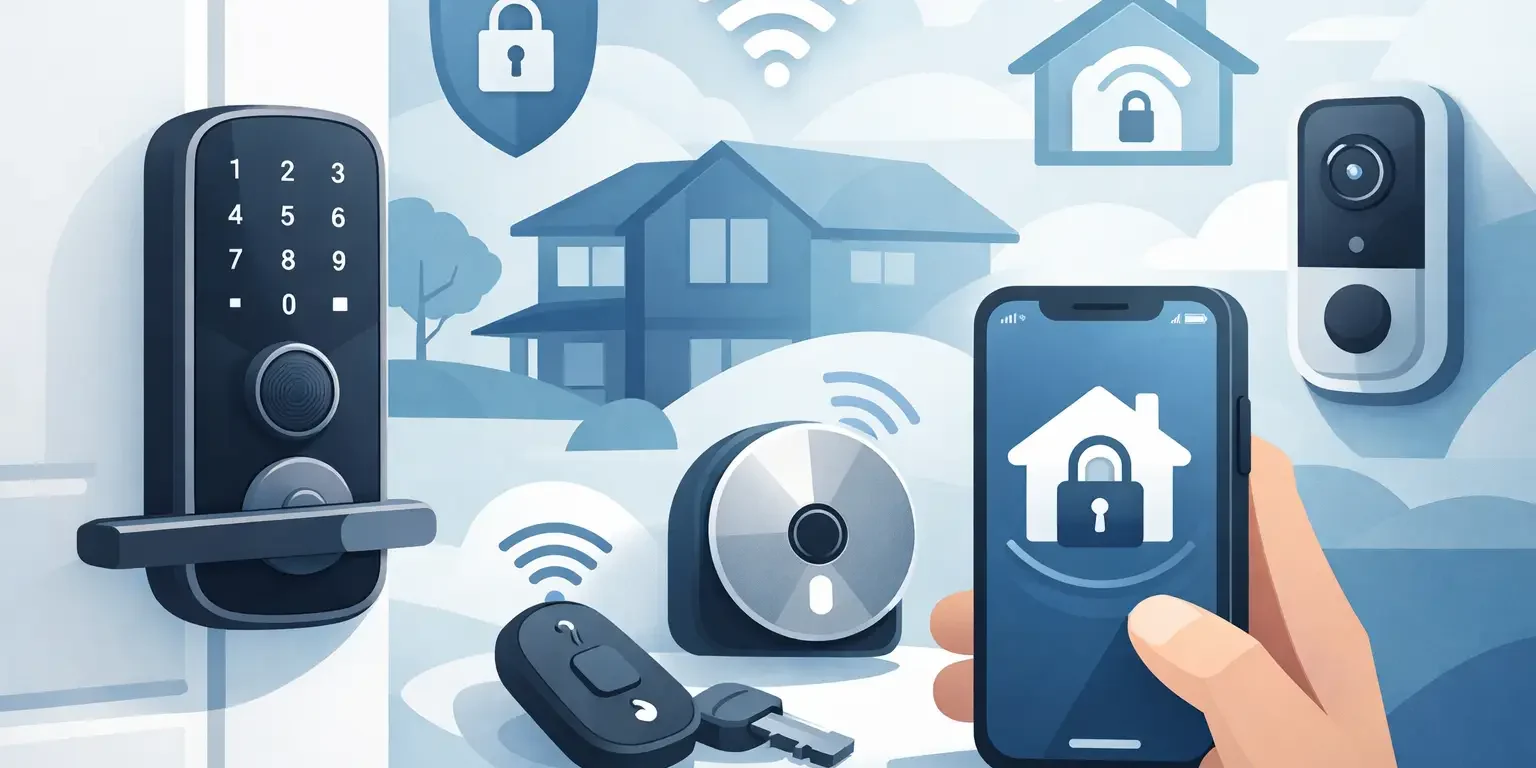
You usually start thinking about the best smart lock for home use after something changes – you moved in, lost track of spare keys, started using cleaners or dog walkers, or just got tired of wondering whether the front door is locked. For most homeowners, the right smart lock is less about gadgets and more about control, convenience, and knowing your door is secured the way it should be.
A smart lock can be a strong upgrade, but not every model fits every house. Some work well for busy families that need multiple codes. Others make more sense for rental properties, side doors, or homeowners who want simple keyless entry without relying heavily on an app. The best choice depends on your door, your habits, and how much technology you actually want to manage.
How to choose the best smart lock for home security
Start with the basics. A smart lock is only as good as the door and hardware around it. If your deadbolt is poorly aligned, your strike plate is loose, or the door frame is worn, the fanciest lock on the market will still give you trouble. Before comparing brands and features, make sure the door itself is in good condition, and the lock can throw the bolt smoothly.
The next question is how you want to use it day to day. Some homeowners want keypad access so kids can get in after school without carrying keys. Others care more about remote control, app notifications, and being able to lock or check the door while away. If you are the kind of person who prefers simple hardware that just works, a basic keypad smart deadbolt may be a better fit than a feature-heavy model tied to several apps and platforms.
Battery dependence is another real-world factor. Smart locks are convenient, but they do require maintenance. Most run on standard batteries, and the better ones give clear low-battery warnings well before failure. Even so, it is smart to choose a lock with a backup option, such as a physical keyway or external emergency power contact. That extra layer matters more than many people realize.
Best smart lock for home: the features that matter most
When homeowners ask what makes one smart lock better than another, the answer is usually a mix of security, reliability, and ease of use. Fancy extras are fine, but they should not come before solid everyday performance.
A strong deadbolt design comes first. Look for recognized lock brands with a good track record in residential security, not just attractive app screenshots. The lock should operate smoothly, resist wear, and fit the door properly. Good installation matters here as much as the product itself.
A keypad is one of the most useful features because it solves the everyday key problem right away. Temporary codes for guests, contractors, or house sitters can be helpful, especially if you do not want extra copies of your key floating around. For property managers, code management can save time during tenant turnover or service calls.
App control can also be valuable, but only if you will use it. Remote locking, activity logs, and custom user access are practical features for many households. If your internet or smart home setup is unreliable, though, those same features can turn into frustration. Some people are better served by a lock that works well at the door first and treats app access as a bonus.
Auto-lock is another feature homeowners like, especially for busy entryways. It can add peace of mind, but it needs to be set carefully. If your door does not close tightly every time, auto-lock can fail or cause unnecessary wear. That is one reason proper fit and adjustment matter so much.
The trade-offs between popular smart lock types
Not all smart locks work the same way, and each type comes with trade-offs.
Retrofit smart locks install on the interior side of the door and keep your existing exterior hardware. These are a good option if you want to keep your current key, maintain the outside look of your door, or avoid changing exterior trim. They can be convenient, but compatibility matters, and some are more dependent on app control than keypad access.
Full replacement smart deadbolts replace the existing deadbolt completely. These often offer the cleanest all-in-one setup, especially if you want a keypad on the outside. They are popular for primary entry doors because they combine keyless entry and smart features in one unit. The downside is that they require more attention to fit, finish, and proper installation.
Lever-style smart locks can work well on certain doors, but for many homes, a dedicated smart deadbolt is still the better security choice for the main entrance. If you are deciding between convenience hardware and a stronger deadbolt setup, the deadbolt usually wins for front door protection.
Fingerprint-enabled models are growing in popularity, and they can be convenient when they are well made. Still, not every reader works equally well in wet weather, cold temperatures, or with dirty hands. For some households, a keypad remains the more dependable everyday option.
Smart home compatibility: useful or unnecessary?
Many buyers get pulled toward locks based on whether they work with voice assistants, home hubs, or automation platforms. That can be helpful, but it should not be the deciding factor unless you already use those systems regularly.
If your household already runs on a connected home setup, compatibility can simplify routines. You may want lighting, cameras, alarms, and door locks to work together. In that case, choosing a smart lock that fits your current system makes sense.
If you are not already using smart home devices, do not feel pressured to buy the most connected option. The best smart lock for home use is often the one that handles locking and access well without creating another tech problem to troubleshoot. Reliable local operation usually matters more than having every possible integration.
Installation matters more than most homeowners expect
A quality smart lock can still perform poorly if it is installed on a misaligned door or paired with weak hardware. Binding, incomplete locking, fast battery drain, and app-related complaints are sometimes installation issues in disguise.
That is especially true in older homes around Ballwin and the greater St. Louis area, where door frames may have shifted over time. A lock might technically fit but still need strike adjustment, latch alignment, or deadbolt correction to work consistently. If the bolt does not move freely by hand before the smart features are added, the lock will likely struggle after installation too.
Professional installation also helps with setup. User codes, app pairing, handling configuration, and calibration all need to be done correctly. For homeowners who want the lock to work right the first time, having it installed and tested by an experienced locksmith is often the simplest path.
What to avoid when shopping for a smart lock
Do not choose a lock based only on appearance or price. A lower-cost unit may look good online but fall short where it counts – motor strength, battery life, weather resistance, and long-term reliability.
It is also wise to avoid buying more features than you need. Some homeowners end up with a lock loaded with app settings, integrations, and remote options they never use. More features can mean more complexity, more updates, and more points of failure.
Be careful with unknown brands that do not have a strong service reputation. Door hardware is not the place to experiment just to save a little money. Recognized brands with dependable parts and support are usually the safer investment.
Finally, do not ignore key access unless you are fully comfortable going key-free. A physical key backup is still useful in many situations, especially during battery issues, setup problems, or phone-related access trouble.
Which smart lock is right for your home?
If you want the simplest upgrade, choose a keypad smart deadbolt from a trusted brand with solid battery life and a backup key. That setup works well for many families and gives you immediate convenience without unnecessary complexity.
If you manage a rental or need to issue and remove access often, prioritize code management and app controls. Activity tracking and temporary user access can save time and reduce rekeying needs between occupants or vendors.
If your home already includes connected devices, choose a smart lock that fits the system you actually use. If not, keep your focus on door fit, hardware quality, and dependable everyday operation.
For many homeowners, the best smart lock for home security is not the most expensive or the most advanced. It is the one that matches the door correctly, holds up over time, and makes daily access easier without creating new problems. If you are unsure what will work best on your entry door, a local mobile locksmith can help you compare options, install the lock properly, and make sure the hardware around it is ready for the upgrade. A good smart lock should make your home feel easier to manage and more secure every time you walk through the door.
Follow us on Pinterest to discover trusted smart lock recommendations, installation tips, and modern home security inspiration.