
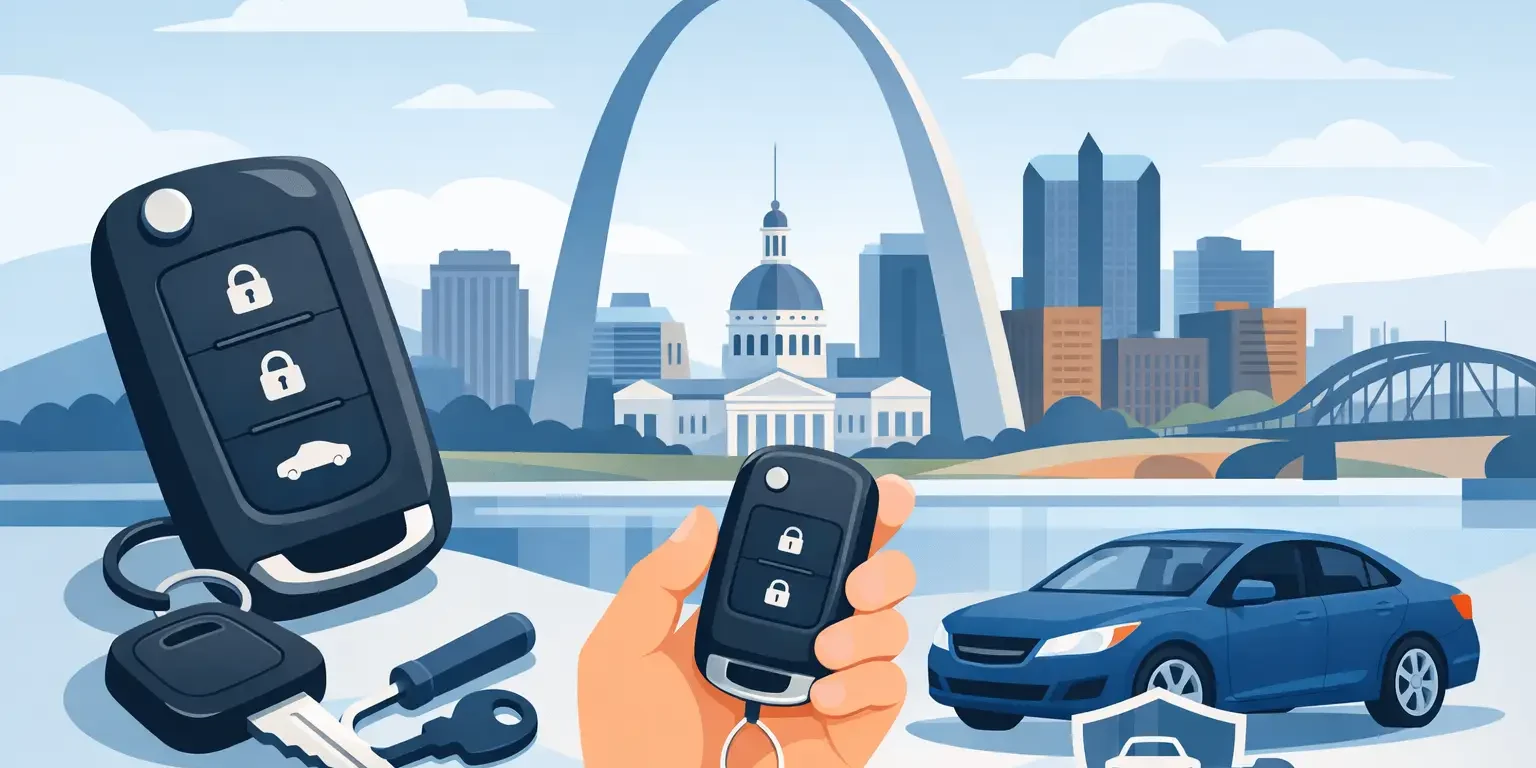
Losing your car key usually happens at the worst possible moment – when you are late for work, stuck in a parking lot, or standing outside your car in bad weather. This car key replacement St Louis guide is built for drivers who need clear answers fast, especially if you are trying to figure out whether you need a basic copy, a programmed fob, or immediate on-site help.
The first thing to know is that not all car keys are the same, and that is what affects price, timing, and the type of service you need. A simple metal key is very different from a transponder key, and both are much simpler than a smart key or push-to-start fob. If you are calling for help, the more details you can provide about your vehicle, the faster a locksmith can tell you what is possible on-site.
What type of key do you have?
If your vehicle is older, you may have a traditional mechanical key with no chip inside. These are usually the simplest to duplicate or replace. In many cases, a locksmith can cut a new one quickly without much delay.
If your key has a plastic head and starts the car electronically, it is probably a transponder key. That means the key must be cut correctly and programmed to communicate with your vehicle. If the chip is not programmed, the key may turn in the ignition but the engine will not start.
Newer vehicles often use remote head keys, separate key fobs, or proximity smart keys for push-button ignition. These systems add convenience, but they also add complexity. Replacement often requires both physical key cutting and electronic programming, and in some vehicles the process is more restricted than others.
Car key replacement St Louis guide: what to do first
Before you panic, stop and check the basics. Make sure the key is truly lost and not locked inside the car, left in a bag, or dropped between seats. It sounds obvious, but many emergency calls start with a key that is still nearby.
If the key is gone, damaged, or stolen, gather your vehicle information before calling anyone. The year, make, model, and trim level matter. In some cases, the VIN is also needed, along with proof of ownership and a photo ID. A professional locksmith should ask for this because replacing a car key is a security-sensitive service.
It also helps to describe the problem clearly. There is a difference between a key that is missing, a fob that no longer responds, and a key that broke off in the ignition. Each one calls for a different solution, and being specific can save time when the technician arrives.
When a locksmith makes more sense than a dealership
Many drivers assume the dealership is their only option. Sometimes it is the right option, especially for certain high-security systems or very new vehicles with limited programming access. But in many everyday situations, a mobile locksmith can handle the job faster and with less disruption.
The practical advantage is convenience. Instead of arranging a tow, waiting for a service appointment, and then returning later, a mobile locksmith can often come to your location, cut the key, program it, and test it on-site. That matters if your car is immobilized at home, in a lot, or on the side of the road.
Cost can also differ. Dealership pricing often includes more overhead, and towing can make the total even higher. A locksmith may be able to offer a more affordable solution, but it depends on the vehicle and the key system involved. The right question is not only who is cheaper, but who can solve the problem correctly and quickly.
What affects car key replacement cost?
The biggest factor is the kind of key your vehicle uses. A basic metal key costs far less to replace than a proximity key for a newer vehicle. Programming requirements, key availability, and the brand of vehicle also affect the total.
Labor is another factor. Cutting a standard key is straightforward. Programming a smart key, syncing a remote, or diagnosing why a replacement key is not recognized can take more time and equipment. If the original key is completely gone, the locksmith may need to generate a new key from the lock code or VIN instead of copying an existing key.
Time and location may matter too. Emergency service after hours can cost more than a scheduled appointment. The good news is that a reputable car key replacement St Louis locksmith should explain the expected cost range before work begins, not surprise you after the fact.
If your key is broken, stolen, or just not working
A broken key does not always mean you need a full replacement system. If the blade snapped but the electronic part still works, part of the key may sometimes be replaced without starting from scratch. If the key is worn down and no longer turns smoothly, a new cut may solve the issue.
If your key was stolen, replacement should be handled differently. In that case, the goal is not only to create a new key but to prevent the old one from working, if your vehicle system allows it. Depending on the vehicle, that may mean reprogramming the car to reject the missing key or addressing the door and ignition security more broadly.
If the fob stopped working, the issue may be simpler than you think. A dead battery, damaged buttons, internal board failure, or lost programming can all cause problems. A proper diagnosis matters because replacing everything is not always necessary.
Why programming matters more than most drivers expect
Drivers are often surprised when a newly cut key opens the door but will not start the engine. That usually points to a chip or programming issue. Modern anti-theft systems are designed to block unauthorized starts, which is good for security but frustrating when you are stranded.
Programming is not one-size-fits-all. Some vehicles allow relatively direct programming with the right equipment. Others require advanced tools, security codes, or manufacturer-specific procedures. This is one reason experience matters. The job is not just about making a key that looks right. It has to communicate correctly with the car.
That is also why bargain online keys can be hit or miss. Some are low quality, some are incorrect for the vehicle, and some cannot be programmed as expected. A cheap key that fails can end up costing more in time and frustration than getting the right part from the start.
How to avoid future key emergencies
The simplest protection is having a car key replacement St Louis made before you need it. Replacing a working key copy is almost always easier than replacing the only key after it disappears. If your current key is cracked, worn, or unreliable, that is a good time to make a backup.
Keep fob batteries fresh and pay attention to warning signs. Reduced range, inconsistent button response, or having to press repeatedly can mean the battery is fading. Replacing it early can prevent a much more stressful situation later.
It is also smart to avoid makeshift repairs. Tape, glue, and damaged shells may keep a key together temporarily, but they can fail in the ignition or stop the chip from aligning properly. If the key housing is breaking apart, address it before it leaves you stranded.
Choosing the right help in St. Louis
When you need automotive locksmith service, speed matters, but trust matters just as much. Look for a company that can explain the process clearly, confirm whether your vehicle can be serviced on-site, and give straightforward pricing information before dispatch. You want a technician who handles both traditional and modern vehicle key systems, not someone guessing at the job.
For drivers in Ballwin and the greater St. Louis area, mobile service is often the most practical option because it brings the equipment to your location. Companies like Locks R Us focus on this kind of response, which helps reduce downtime and removes the hassle of towing your vehicle across town for a key issue.
A missing or damaged key can feel like a major problem in the moment, but the fix is usually more manageable once you know what type of key you have and what kind of service it requires. The best next step is a simple one: get accurate answers quickly, choose a qualified professional, and if your current key still works, make that spare before your luck runs out.
Visit our Pinterest for more expert car key replacement tips, automotive locksmith insights, and simple guides every driver should know.