
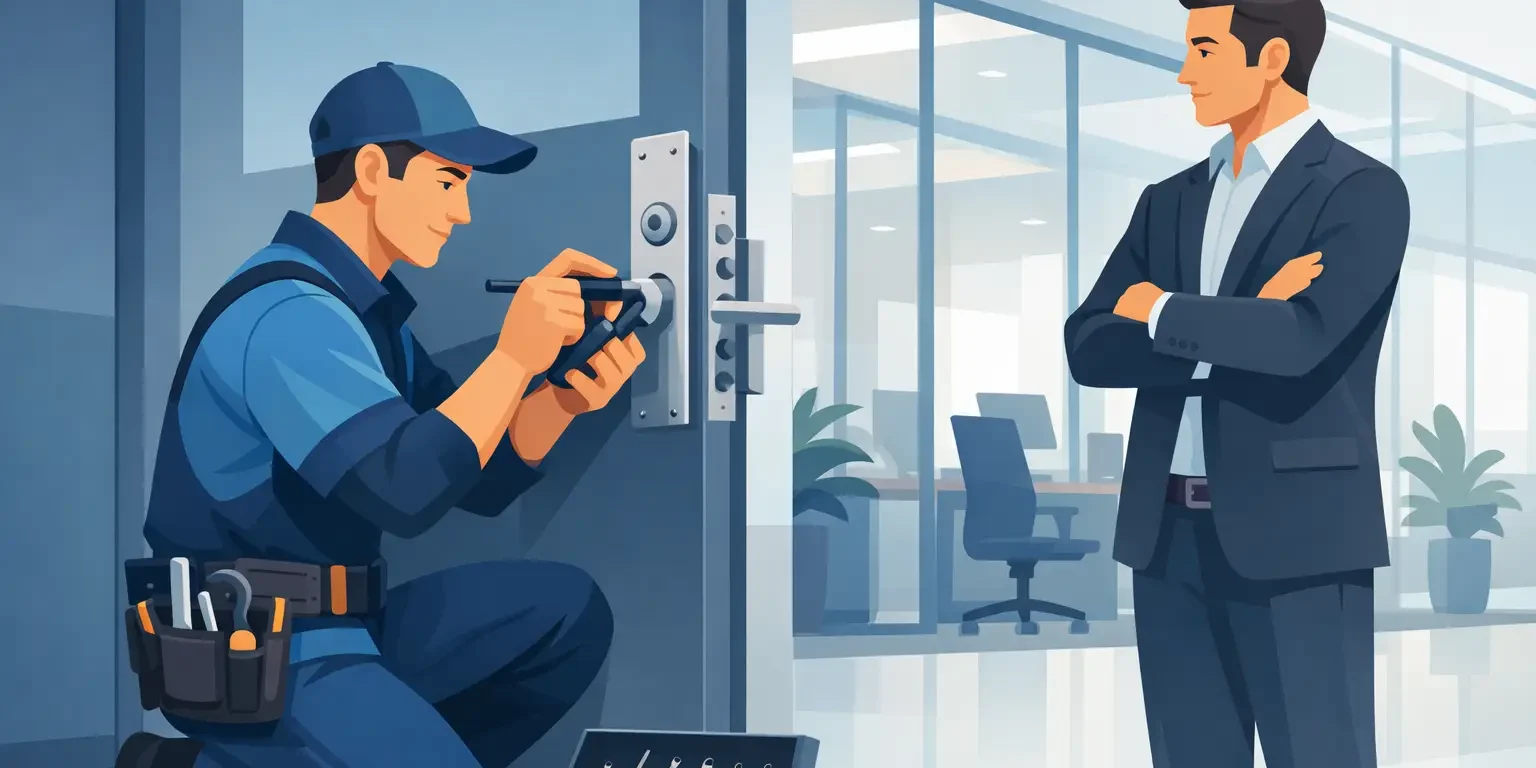
A front office door that sticks at 8:55 a.m. can throw off your whole day. A lock that turns halfway, jams, or stops latching is more than an inconvenience – it can slow down staff, frustrate customers, and leave your property exposed. That is why commercial door lock repair matters for businesses that need secure access, dependable hardware, and fast service when something goes wrong.
For most businesses, lock problems do not start with a complete failure. They start small. A key gets harder to turn. The latch does not catch cleanly. An employee has to pull the door tight to lock it. Those early signs are easy to ignore, especially when the door still sort of works. The trouble is that commercial hardware gets heavy daily use, and small problems tend to become expensive ones if they are left alone.
Why commercial door lock repair should not wait
In a commercial setting, a faulty lock affects more than one person. It can impact employees arriving for a shift, customers entering the building, delivery drivers accessing a service entrance, or tenants moving through shared spaces. If the lock is tied to a storefront, office suite, warehouse, or multi-unit property, every delay creates a security and operational problem.
Waiting too long can also damage more than the lock itself. A misaligned door can wear down the latch, strike plate, cylinder, and closer all at once. If someone keeps forcing the key or pushing a door that is out of adjustment, the repair may go from a simple service call to a full hardware replacement. In some cases, the issue is not even the lock body – it is the frame, the panic bar, the door closer, or the way the door hangs.
That is why a proper diagnosis matters. Good locksmith work is not just swapping out parts. It is figuring out what is actually causing the failure and fixing the whole problem, not just the symptom.
Common problems that call for commercial door lock repair
Commercial locks are built for durability, but they still wear down under constant use. Office entry doors, retail storefronts, apartment common areas, and back-of-house service doors all put different kinds of stress on the hardware.
One of the most common issues is cylinder wear. If the key no longer slides in smoothly or takes extra effort to turn, the pins inside the cylinder may be worn, dirty, or damaged. Sometimes the key is worn down too, especially if multiple copies have been made over time.
Misalignment is another frequent problem. Doors settle. Hinges loosen. Weather changes affect expansion and contraction. Even a strong commercial lock will struggle if the latch and strike are no longer lining up correctly. In that case, replacing the lock alone will not solve much.
Businesses also run into trouble with damaged levers, loose lock trim, jammed deadlatches, and malfunctioning electronic components. If you use keypad locks, smart access hardware, or integrated entry systems, issues may involve batteries, programming, wiring, or failed readers in addition to mechanical wear.
After a break-in attempt, the need for repair is often obvious. Bent hardware, damaged cylinders, cracked trim, and doors that no longer secure properly should be handled right away. Even if the lock still engages, hidden internal damage can make it unreliable.
Repair or replace? It depends on the hardware and the risk
Not every failing lock needs to be replaced. In many cases, commercial door lock repair is the most cost-effective option, especially when the hardware is high quality and the problem is isolated. A skilled technician may be able to rekey the cylinder, replace internal parts, realign the strike, tighten the mounting hardware, or service the closer so the lock works correctly again.
Repair makes sense when the door hardware is still structurally sound, compatible with your access needs, and worth preserving. This is often true for branded commercial-grade locks, mortise hardware, storefront locks, and master key system components.
Replacement is usually the better move when the lock is heavily worn, outdated, poorly matched to the door, or compromised after repeated problems. It may also be the safer option if your business has had employee turnover, lost keys, or changing security needs. In those cases, replacing or upgrading the hardware can save money over time and improve daily reliability.
The right answer depends on cost, condition, and security. A cheap repair on a failing lock can end up costing more if the same door causes another shutdown a week later. On the other hand, replacing every problem lock without checking alignment, door fit, and usage patterns can waste money too.
What a professional repair visit should include
A business owner or property manager should not have to guess whether a lock issue is minor or urgent. A proper service visit starts with checking the full door assembly. That includes the lock, cylinder, keyway, strike plate, hinges, closer, panic hardware if present, and overall alignment.
From there, the technician should explain what is failing, what can be repaired, and whether replacement would be the smarter long-term option. Clear recommendations matter. So does transparent pricing. If a business needs the door secured immediately, the repair should focus first on making the entry functional and safe, then addressing any upgrades if needed.
For commercial properties, speed matters, but so does compatibility. Office doors, aluminum storefront doors, steel doors, and restricted key systems all require the right parts and the right experience. The goal is not just to get the door to close today. It is to restore dependable access without creating a new problem next month.
Commercial door lock repair for different business settings
A retail store often needs quick front-door service with minimal disruption to customers. If the issue affects opening hours, the response has to be fast and practical. In an office setting, the concern may be employee access, suite security, or keeping a reception area controlled during business hours.
Property managers tend to deal with a mix of issues: common area doors, tenant turnover, gate access, storage rooms, and maintenance entries. In those situations, consistency matters. A repair may need to fit an existing master key system or match hardware already used throughout the property.
Industrial and warehouse spaces have their own demands. Heavy-duty doors, high-use entries, and after-hours access points require hardware that can handle repeated use without becoming a weak point in the building’s security.
That is why local mobile service is such an advantage. When the technician comes to the property with the tools and parts needed for commercial work, the problem can often be fixed on-site without the delay of removing hardware and waiting days for a basic solution.
How to reduce future lock problems
Commercial locks last longer when the door works the way it should. That means paying attention to small signs before they become failures. If a key sticks, if staff members have to slam the door, or if the latch misses the strike once in a while, that is the time to schedule service.
It also helps to keep key control tighter. Worn copies, unauthorized duplicates, and rough handling can shorten the life of a cylinder. If your business has frequent staff changes, rekeying is often a better security move than continuing to circulate old keys.
For businesses using electronic locks, regular battery checks and periodic testing are worth the effort. Mechanical and electronic systems both benefit from occasional professional attention, especially in high-traffic buildings where the hardware rarely gets a break.
A trusted locksmith can also point out whether your current setup still matches your needs. Sometimes a recurring repair issue is really a sign that the door needs better-grade hardware, a closer adjustment, or a different access method altogether.
When fast service matters most
Some lock issues can wait until the afternoon. Others cannot. If your business cannot secure a main entrance, if employees are locked out, if a break-in has damaged the hardware, or if a fire-rated or controlled-access door is not functioning properly, the repair should be treated as urgent.
Business owners across Ballwin and the greater St. Louis area often need help at the exact moment a lock problem starts costing time and money. In those moments, dependable mobile service matters. Locks R Us handles commercial lock issues on-site with a focus on quick response, honest recommendations, and repair work that holds up under daily use.
A commercial door does not have to fail completely to deserve attention. If it is sticking, slipping, loosening, or becoming unreliable, getting it checked early is often the simplest way to protect your property, your schedule, and the people who rely on that door every day.
Stay connected on Facebook for the latest commercial door lock repair insights, preventive maintenance tips, and trusted locksmith services for commercial properties.