
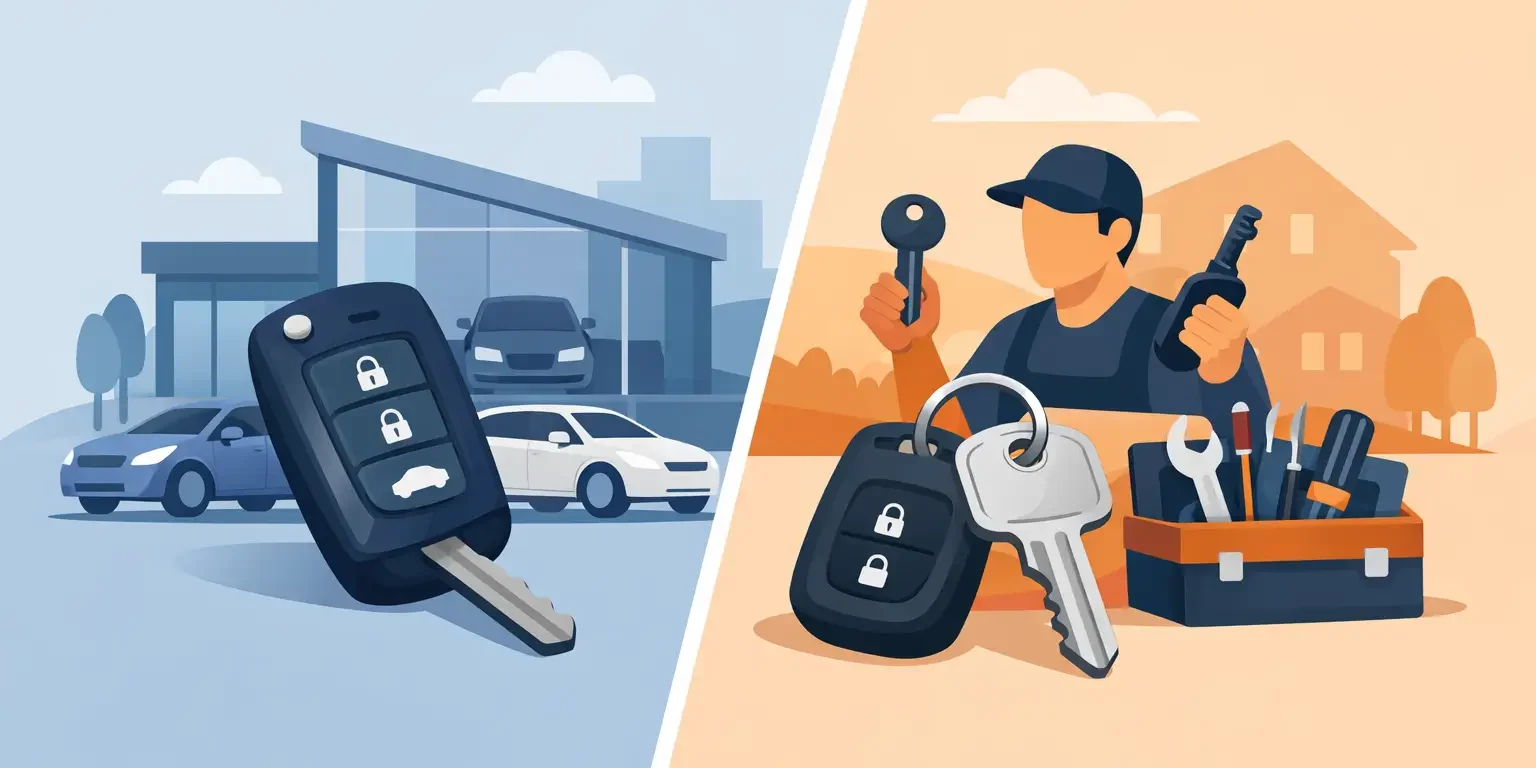
You realize your car key is gone when you are already late, standing in a driveway, parking lot, or office lot with no backup plan. In that moment, the dealership vs locksmith keys question stops being theoretical. It becomes about one thing – how fast you can get back on the road without overpaying.
For many drivers, both options sound similar at first. Both can replace keys. Both may be able to program a fob. Both can help with modern transponder or push-to-start systems. But the experience, cost, wait time, and convenience can be very different depending on your vehicle and what kind of key problem you have.
Dealership vs locksmith keys: the basic difference
A dealership usually handles replacement keys through the vehicle brand’s service or parts department. That can work well if you have a newer vehicle, need a factory-original part, or have a warranty situation that points you back to the dealer. The process is often structured, brand-specific, and tied to business hours, inventory, and the need to bring documentation – and sometimes the vehicle itself.
A locksmith, especially a mobile automotive locksmith, comes to your location and handles the key issue on-site in many cases. That matters when the car will not start, the key broke off, the fob stopped responding, or you simply cannot drive to a dealership. A qualified locksmith can often cut and program replacement keys for many makes and models without the added step of towing the vehicle.
That is the first real dividing line. Dealerships are tied to the shop. Locksmiths are built around field service.
Cost is usually where the decision starts
If you are comparing dealership vs locksmith keys, price is often the first concern, and for good reason. Car key replacement can range from fairly simple to surprisingly expensive depending on the vehicle year, make, model, and security system.
Traditional metal keys are usually the least expensive to duplicate or replace. Once you get into laser-cut keys, chip keys, remote head keys, and smart proximity fobs, the cost goes up because the job involves both hardware and programming. Dealerships often charge more because of parts pricing, overhead, and labor structure. In some cases, they also require towing if all keys are lost and the vehicle cannot be driven in.
A locksmith is often more affordable, especially for lost car keys, spare keys, and replacement fobs. Mobile service can save money if it eliminates the need for a tow. That said, cheaper is not always better. If someone offers a very low quote without asking for the vehicle details, there is a good chance the final bill changes once they arrive or they cannot complete the work at all.
The right question is not just, “Who is cheapest?” It is, “Who can handle this specific key system correctly at a fair price?”
Speed matters when you need the car today
This is where locksmith service often has a clear advantage.
Dealerships work on appointment schedules, parts availability, and service department hours. If they need to order a key or fob, you may be waiting days instead of hours. If the vehicle must be present for programming, you may also need to arrange transportation or a tow before the key replacement even begins.
A mobile locksmith is usually the faster option when you are locked out, stranded, or dealing with an all-keys-lost situation. For many common vehicles, the technician can cut and program the key on-site the same day. That speed is not just convenient. It can save a workday, a tow bill, and a lot of unnecessary stress.
In the St. Louis area, that on-site convenience is a major reason drivers call a mobile locksmith first. When your vehicle is sitting in a driveway in Ballwin or stuck in a store parking lot, getting service where the car is parked is often the difference between a manageable problem and a full-day disruption.
Which option handles more key problems?
People often think only a dealership can handle advanced vehicle keys. That is not always true.
A skilled automotive locksmith can often help with standard key duplication, transponder key programming, key fob programming, broken key extraction, ignition-related key issues, and all-keys-lost replacements for many domestic and foreign vehicles. Many also work with high-security sidewinder keys and proximity remotes.
Dealerships still have an advantage in some cases. Very new models, rare vehicles, proprietary systems, or certain encrypted smart keys may require dealership tools, dealer-only codes, or manufacturer access. Some luxury brands are especially restrictive. If a vehicle has a newer anti-theft system that is tightly controlled by the manufacturer, the dealership may be the only practical path.
So the honest answer is that it depends on the vehicle. For a large share of everyday key replacement jobs, a qualified locksmith can do the work. For a smaller group of highly restricted systems, the dealer may be necessary.
Convenience is not a small detail
When people compare dealership vs locksmith keys, they sometimes focus so much on price that they overlook the logistics.
A dealership may ask you to schedule service, verify ownership, wait for parts, arrange towing, or sit in a service lobby while the key is ordered or programmed. That process can be fine if the car is drivable and the timing is not urgent.
A locksmith usually brings the service to you. That matters for busy parents, commuters, property managers, and anyone stuck with a disabled vehicle. It also helps when the issue is not just a missing key but a practical problem like a key snapped in the door, a dead fob, or a car that recognizes no working key at all.
Convenience also affects risk. Moving a vehicle without a working key can create more hassle and expense. If the problem can be handled where the vehicle sits, that is often the cleaner solution.
Quality depends on the provider, not just the category
Some drivers assume the dealership is always better because it is brand-authorized. Others assume the locksmith is always better because it is faster and less expensive. Neither is automatically true.
The real issue is whether the person handling the job has the right equipment, the right training, and the right replacement parts for your vehicle. Key programming is not guesswork. Modern vehicle security systems are sensitive, and poor programming or low-grade parts can create repeat failures, signal issues, or a key that works inconsistently.
That is why technician training matters. So does experience with both older mechanical keys and newer electronic systems. A reliable locksmith should be able to explain what type of key your vehicle uses, what programming is required, and whether there are limits based on make and model. If they cannot explain the process clearly, that is a red flag.
When the dealership makes more sense
There are situations where the dealership is the smarter call.
If your vehicle is extremely new, still under certain manufacturer programs, or uses a tightly restricted smart key system, the dealer may be the correct source. The same is true if you specifically want an OEM-only replacement and are not concerned about extra time or logistics. Some drivers also prefer the dealership route for lease-return consistency or brand documentation.
If you already have one working key and simply want a backup for a common vehicle, though, a locksmith is often the more efficient choice.
When a locksmith makes more sense
A locksmith is often the best option when time, mobility, and practical problem-solving matter most.
If you lost all keys, are locked out, cannot start the vehicle, broke a key in the ignition, or need on-site programming, a mobile locksmith is usually better positioned to help quickly. The same is true if you want to avoid towing and would prefer a straightforward service call where the vehicle is located.
For many drivers, this is the key point. You are not just buying a part. You are paying for resolution. If the problem gets fixed faster, on-site, and at a fair price, that often outweighs the appeal of going through the dealership.
How to choose without wasting time
Before you decide, have your vehicle year, make, model, and VIN ready. Know whether you lost all keys or still have one working key. Be ready to confirm ownership. Then ask a direct question: Can you cut and program this key on-site today, and what is included in the quoted price?
That single question clears up most of the confusion. It tells you whether the provider actually handles your type of key, whether towing is likely, and whether the quote covers both cutting and programming. If you are speaking with a locksmith, ask whether they service your location and whether the replacement key or fob is in stock. If you are speaking with a dealership, ask if the vehicle must be present and how long the process will take.
For drivers who want fast, honest automotive key help without the extra hassle of getting the car to a shop, a mobile company like Locks R Us often fits the real-world need better than a dealership. The best choice is the one that gets you a working key quickly, correctly, and without surprises. When your car key situation goes sideways, simple and reliable usually wins.