
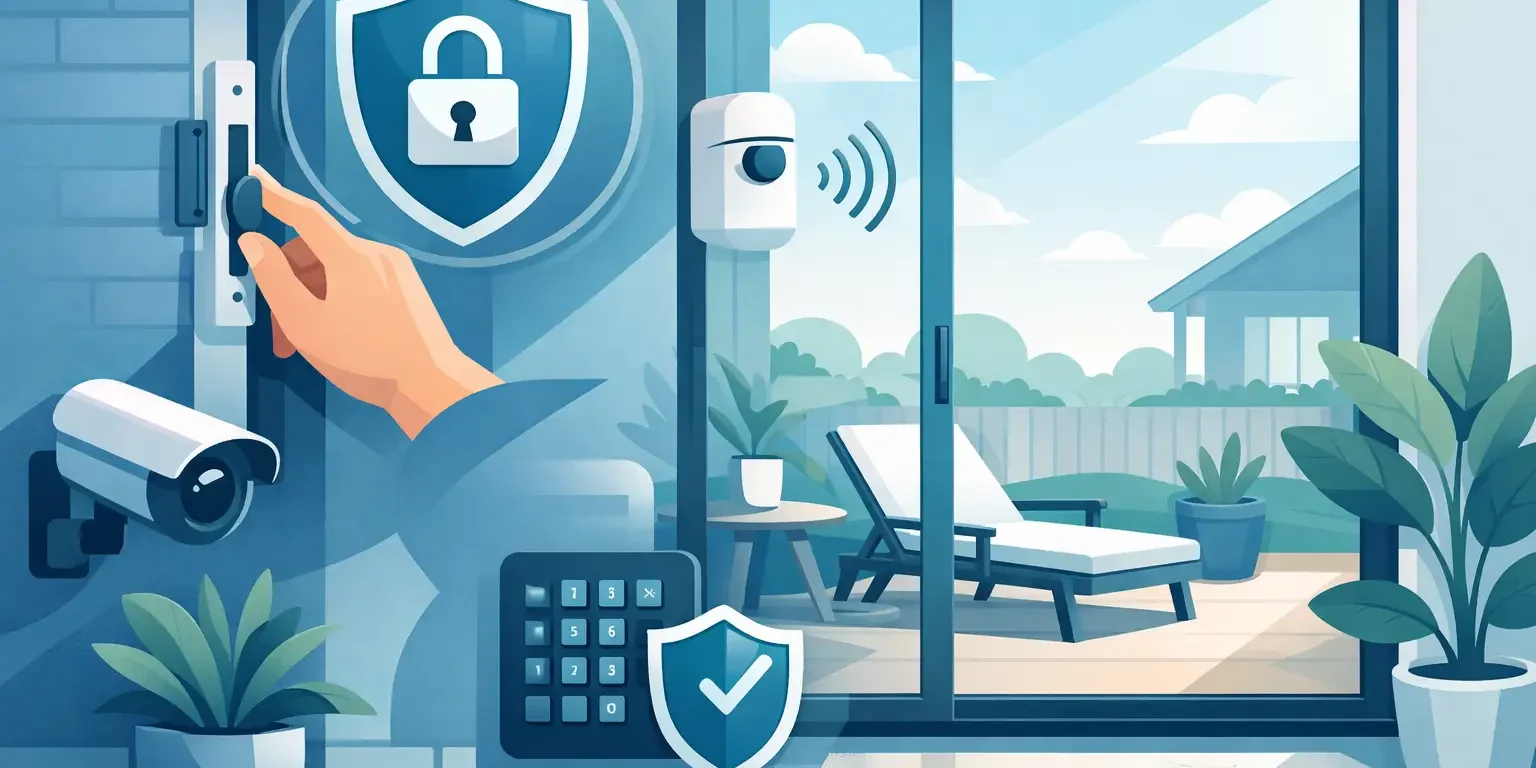
A patio door can make a home feel open and inviting, but it can also be one of the easiest entry points to overlook. If your sliding glass door rattles in its track, has a basic latch, or has not been inspected since you moved in, it is time to upgrade patio door security before a small weakness becomes a real concern.
For homeowners across Ballwin and the St. Louis area, the right upgrade is usually not one expensive product. It is a combination of a dependable lock, a secured track, a strong frame, and hardware installed correctly. The best setup depends on the type of door you have, its condition, and how often your household uses it.
Start With the Door You Already Have
Before buying new hardware, test the door itself. Close and lock it, then gently push and pull from the outside-facing side. A secure door should not lift easily in the track, slide when locked, or show a visible gap where the latch meets the frame.
Sliding patio doors commonly rely on a small hook-style latch. When the door is aligned properly and the strike plate is secure, that latch can provide useful everyday protection. Problems begin when the rollers wear down, the door sags, or the latch no longer reaches the strike plate cleanly. A stronger lock will not perform as intended if the door is out of alignment.
Look closely at the frame and track as well. Dirt, worn rollers, loose screws, and bent metal can create enough play for a door to be forced or lifted. Cleaning the track and correcting alignment may be the first step, particularly on an older door. If the frame is damaged or the locking point is badly worn, repair or replacement may be the more sensible long-term option.
Upgrade Patio Door Security With Better Locks
A secondary lock is one of the most practical improvements for a sliding patio door. It adds protection beyond the factory latch and can make forced opening much more difficult. The right option depends on your door material, frame design, and whether children or older adults need easy access in an emergency.
A keyed sliding-door lock can provide stronger control than a standard thumb latch, especially when the original lock is loose or worn. However, the key should be managed carefully. Keep emergency egress in mind, and never create a setup that could delay someone leaving the home during a fire or other emergency.
Foot bolts and pin locks are another option. These devices secure the moving panel to the frame or track, preventing it from sliding even if the main latch is bypassed. They are especially helpful for doors that are rarely used. For a primary patio entrance, choose hardware that is convenient enough that everyone in the household will actually use it.
A security bar or dowel placed in the bottom track is simple, affordable, and effective when fitted properly. It should sit firmly between the moving panel and the opposite side of the frame. A loose broom handle is not the same as a properly sized bar. If it shifts, can be kicked aside, or prevents proper locking, it needs adjustment.
Secure the Frame, Track, and Lift Points
Many patio-door security problems are not caused by the lock alone. Sliding doors can sometimes be lifted from their tracks when the rollers are poorly adjusted or when the upper track does not have an anti-lift feature.
An anti-lift device helps limit upward movement of the sliding panel. Depending on the door, this may involve adjusting the rollers, installing a stop, or adding hardware at the top of the frame. The goal is to keep the door seated in the track without causing it to drag or become difficult to operate.
Check the screws holding the latch and strike plate in place. Short screws that only grip thin trim or soft material offer limited resistance. In many cases, longer screws installed into solid framing provide a more secure hold. This work requires care, since the wrong screw length or placement can damage a vinyl, aluminum, or fiberglass frame.
French patio doors need a different approach. The inactive door should have dependable top and bottom flush bolts, while the active door should use a quality deadbolt or multipoint locking system. If either door has loose hinges, a weak strike plate, or gaps around the frame, address those issues before relying on an electronic upgrade.
Do Not Rely on Glass Alone
Patio doors provide a wide view of the yard, which is one reason homeowners like them. The glass also deserves attention. Keep furniture, spare keys, garage remotes, and valuables away from direct view near the door. A would-be intruder should not be able to see an easy target or reach an unlock button after breaking glass.
Security film can help hold broken glass together and may slow an attempted entry. It is not a replacement for a proper lock or a reinforced frame, and its effectiveness depends on the glass type and installation quality. For homes with older single-pane glass or damaged insulated panels, replacing the door or glass assembly may offer better safety, comfort, and energy performance.
Window and door sensors add another useful layer. A contact sensor can alert you when the door opens, while a glass-break sensor may help detect a forced entry attempt nearby. These products work best as part of a broader home security plan, not as a substitute for physical locks.
Improve Everyday Habits Around Patio Doors
The strongest hardware cannot help if the door is routinely left unlatched. Make locking the patio door part of the same routine as checking the front door at night. If children use the door often, select a solution that is easy for adults to verify at a glance but difficult for young children to defeat.
Outdoor lighting also matters. A well-lit patio, deck, or backyard entrance removes a convenient hiding place and makes suspicious activity easier to notice. Trim shrubs that block the view around the doorway, and make sure fence gates and side-yard access points are secured too. Patio-door security should not stop at the glass.
Smart locks can be useful on hinged patio doors, particularly when you want keyless access, activity alerts, or temporary codes for family members and service providers. They are not a universal answer for sliding doors, where compatibility is more limited. Choose electronic hardware from a recognized brand and make sure the door, frame, and latch are in good working order first.
When to Call a Locksmith
If your patio door does not close squarely, the latch misses the strike, the key turns without locking, or the frame is cracked, a professional inspection can save you from buying the wrong hardware. A qualified locksmith can identify whether the problem is the lock, rollers, alignment, strike plate, or frame and recommend an upgrade that fits your door.
Locks R Us provides mobile locksmith service for homeowners throughout Ballwin and the greater St. Louis area, including lock repair, lock replacement, deadbolt installation, and practical residential security upgrades. A technician can bring the right tools and hardware to your home, explain the options clearly, and complete the work on-site.
A patio door should be easy to enjoy and hard to defeat. If yours feels loose, sticks in the track, or relies on a latch you no longer trust, address it now while the repair is straightforward and your home remains protected.