
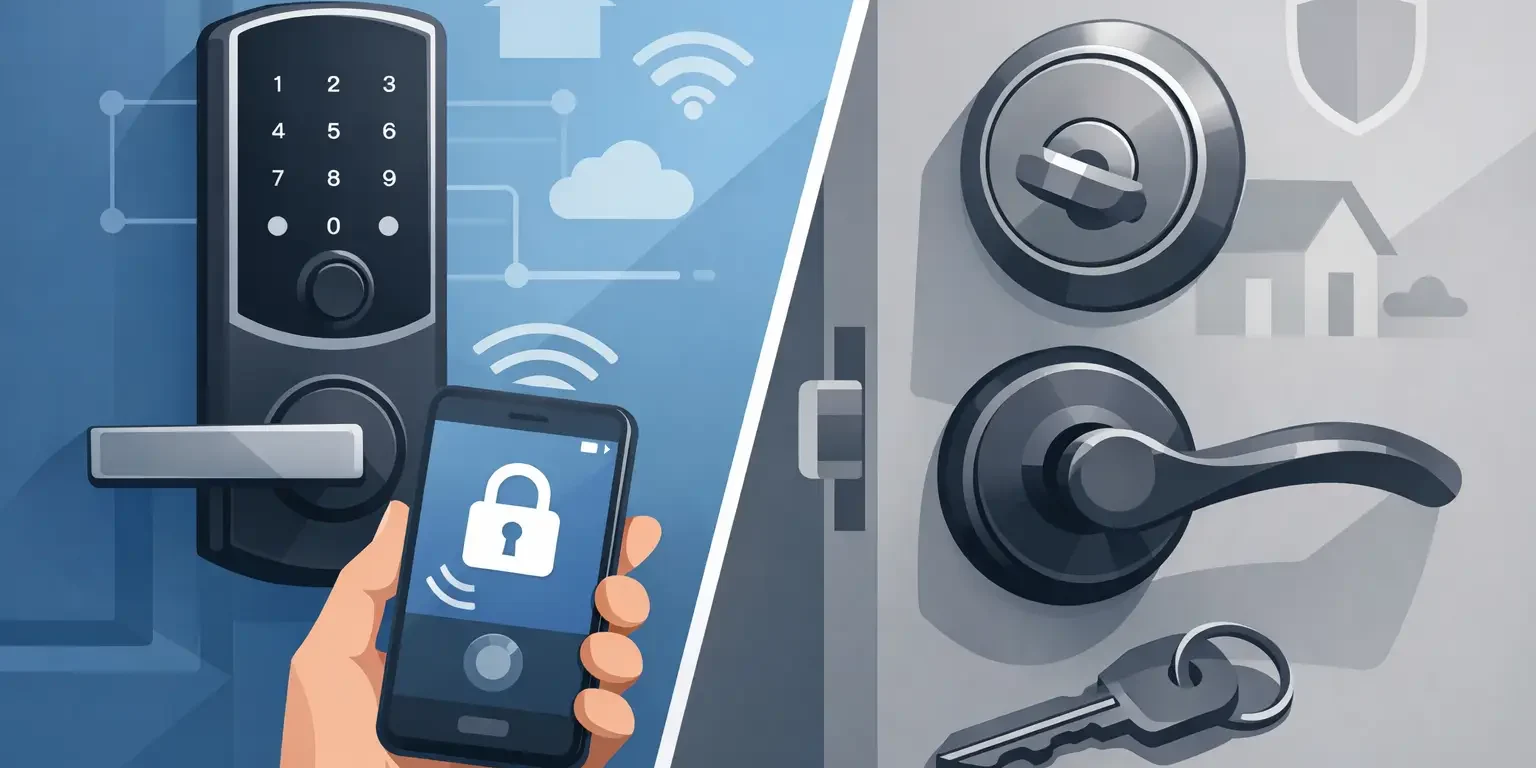
A front door problem usually shows up at the worst time – after a move, after a breakup, after a tenant leaves, or right after you realize your current lock does not give you much confidence. When homeowners compare smart locks vs deadbolts, they are usually not shopping for a gadget. They are trying to make a practical security decision that fits their property, budget, and daily routine.
The short answer is that one is not automatically better than the other. A traditional deadbolt is simple, proven, and often very dependable. A smart lock adds convenience and control, but the right setup depends on the door, the people using it, and how much ongoing management you want.
Smart locks vs deadbolts: the real difference
A standard deadbolt is a mechanical lock. You lock and unlock it with a key from the outside and a thumb turn from the inside. Its strength comes from solid hardware, correct installation, and a properly aligned strike plate and door frame.
A smart lock is usually an electronic locking system that may replace part or all of your existing deadbolt. Some models still use a physical deadbolt mechanism but add keypad entry, app control, temporary codes, auto-lock features, and audit trails. Others are retrofit devices that turn the inside portion of an existing deadbolt while keeping your exterior key cylinder.
That distinction matters. Many people talk about smart locks and deadbolts as if they are separate categories, but some smart locks are deadbolts. The better question is whether you want a traditional mechanical deadbolt or an electronic deadbolt with smart features.
Security is not just about the lock
People often assume the more advanced lock must be the more secure one. That is not always true. Real-world security depends on more than the lock body itself. The quality of the door, the condition of the frame, screw length, strike reinforcement, and proper installation all matter.
A high-quality deadbolt installed correctly on a solid door can provide excellent protection. It has fewer components that can fail, and there is no battery, app, or wireless connection involved. For many homes and small businesses, that simplicity is a major advantage.
A smart lock can also be very secure when it comes from a trusted brand and is installed correctly. In some situations, it improves practical security because people are more likely to use it consistently. A lock that auto-locks after the door closes may protect a home better than a traditional deadbolt that family members forget to throw.
That said, smart locks introduce new variables. Battery life, software settings, user permissions, and occasional connectivity issues become part of the picture. If those details are ignored, convenience can start working against you.
Where deadbolts usually have the edge
Traditional deadbolts are hard to beat for straightforward durability. They are especially attractive for exterior doors that need dependable, low-maintenance security without extra features. Property owners who do not want to manage access codes, apps, or battery checks often prefer them for that reason.
They also make sense in lower-tech environments. A storage room, side entry, detached garage, or basic rental unit may not need anything more complicated than a strong mechanical deadbolt and good key control.
Where smart locks usually have the edge
Smart locks shine when access changes often. If you manage rental properties, have cleaners or contractors coming in, need to give temporary access to family, or want to know when a door was opened, smart features can save time and reduce hassle.
For businesses, the benefit is often operational, not just technical. Being able to issue or remove a code without physically collecting keys can simplify staff turnover. For homeowners, keypad entry can end the cycle of hiding spare keys, making copies, or dealing with lockouts caused by forgotten keys.
Convenience is where smart locks pull ahead
This is the category that usually drives the purchase. Smart locks can make everyday access much easier. Keypads let kids or employees enter without carrying a key. Temporary codes work well for dog walkers, maintenance crews, and short-term visitors. Some systems also let you check lock status remotely.
A deadbolt, by comparison, is simple but limited. If someone loses a key or moves out with a copy, your answer is usually rekeying or replacing hardware. That is not a flaw in the product. It is just the nature of a key-based system.
Convenience, however, only helps if the lock is set up well. A poorly installed smart lock, a weak Wi-Fi connection, or a confused app user can quickly turn a time-saving feature into a service call.
Cost is more than the sticker price
Traditional deadbolts usually cost less upfront. Hardware is often more affordable, and installation is generally simpler. If you want solid security on a budget, this is often the most practical path.
Smart locks cost more at the start, especially if you want reputable hardware with strong build quality and dependable software. Professional installation may also be more important, particularly if the door has alignment issues or the lock needs to work with an existing deadbolt, handle set, or access system.
Long term, the cost difference can narrow or widen depending on your situation. A smart lock may save time for landlords and office managers who regularly change access. A standard deadbolt may be cheaper to own if your needs are stable and you do not need digital features.
Smart locks vs deadbolts for different properties
For a single-family home, the best choice often comes down to lifestyle. If you want a reliable lock with minimal upkeep, a quality deadbolt is a strong option. If your household juggles kids, guests, service providers, or frequent lockouts, a smart lock may be worth the extra cost.
For rental property owners, smart locks can reduce key management headaches, but they are not the answer for every unit. In some properties, a fresh rekey and a commercial-grade deadbolt may be the cleaner, tougher, and more cost-effective solution.
For small offices and storefronts, smart locks can offer better control over who has access and when. That said, heavy-use commercial doors may need hardware designed for higher traffic and stricter code requirements. The lock has to match the building, not just the trend.
Installation matters more than most people think
A good lock installed badly will underperform. This is true for both options, but smart locks are less forgiving. If the bolt drags, the door is sagging, or the frame is out of alignment, the motor may struggle or fail over time.
Deadbolts also need correct fit and reinforcement. The bolt should extend fully, the strike should be solid, and the hardware should sit tight without binding. A rushed installation can leave weak points that no brand name will fix.
This is why many property owners benefit from having the door and frame evaluated before choosing hardware. Sometimes the smartest move is not upgrading to a more advanced lock. It is correcting the door condition first.
Maintenance and reliability over time
A deadbolt asks for very little. Occasional lubrication, checking for loose screws, and replacing worn keys usually covers it. That simplicity is part of its appeal.
A smart lock needs more attention. Batteries have to be replaced. Codes should be reviewed and deleted when no longer needed. Firmware updates may apply, depending on the model. Most smart locks are dependable when maintained, but they do require a little ownership.
This is where honest expectations matter. If you like set-it-and-forget-it hardware, a mechanical deadbolt may fit you better. If you are comfortable managing a few settings in exchange for easier access control, a smart lock can be a strong upgrade.
Which option fits your property?
Choose a traditional deadbolt if you want proven physical security, lower upfront cost, and minimal upkeep. It is a strong fit for homeowners who want something straightforward and for property managers who need durable hardware without extra management.
Choose a smart lock if convenience, flexible access, and control matter more to your daily routine. It is especially useful when multiple people need entry, when access changes often, or when keyless entry would solve an ongoing problem.
For many properties, the best answer is not smart lock or deadbolt. It is a quality deadbolt system with the right level of smart functionality for the people actually using the door. That balance matters more than choosing the newest option on the shelf.
If you are unsure, the safest approach is to match the lock to the door, the traffic level, and the way the property is used. A local locksmith with experience in both mechanical and electronic hardware can help you avoid buying the wrong lock for a very real security need.
The right lock should make your property feel more secure, not more complicated.