
If you just moved into a home, had employee turnover, lost a key, or noticed a lock starting to fail, the question gets urgent fast: rekey vs replace locks – which one actually solves the problem without wasting money? The right answer depends on what changed, what condition the hardware is in, and how much security control you need right now.
For many property owners in Ballwin and the greater St. Louis area, this decision is less about theory and more about timing. You want the doors secured, the work done correctly, and the price to make sense. That is where understanding the difference between rekeying and replacing helps.
What rekey vs replace locks really means
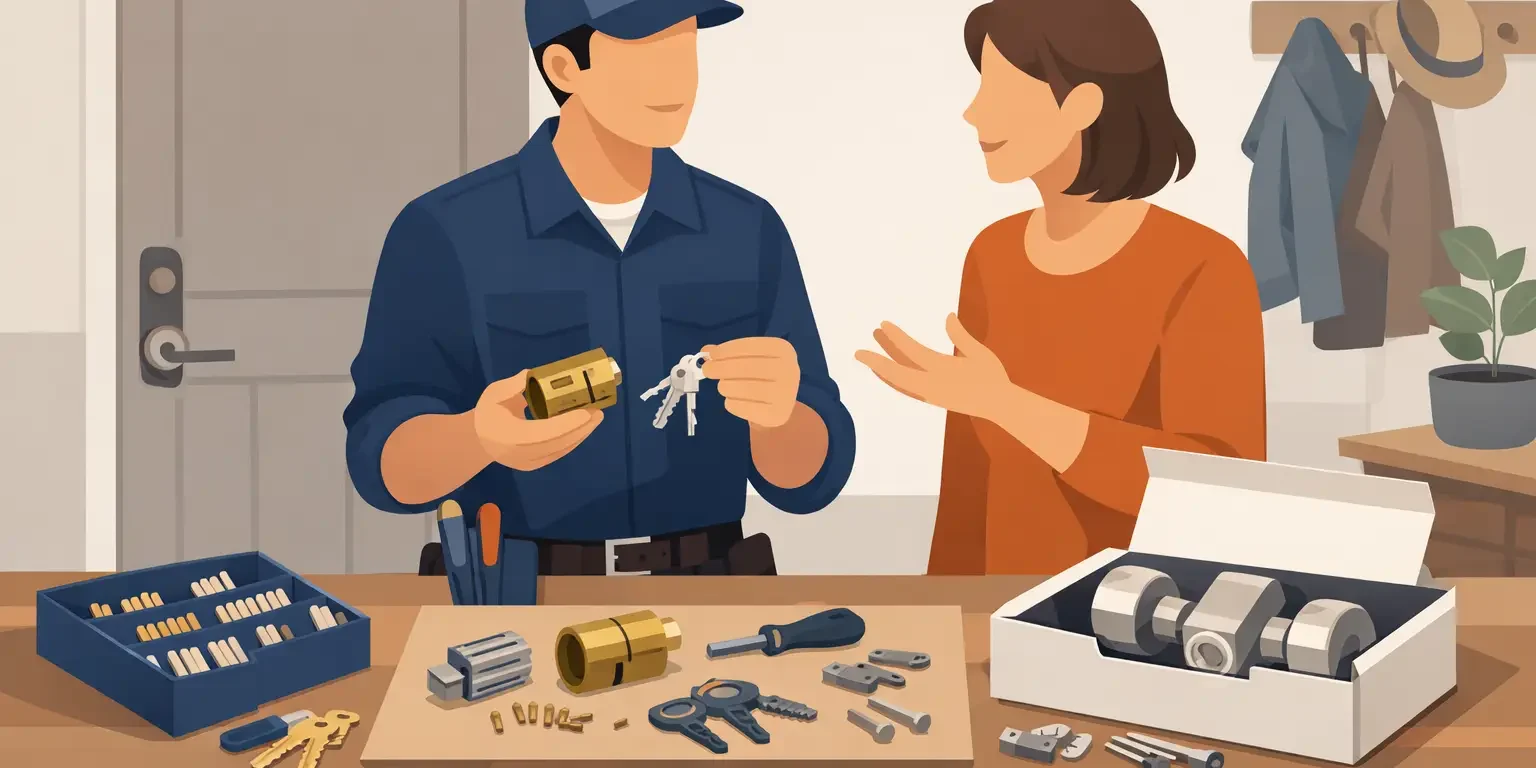
Rekeying a lock means changing the internal pins so the old key no longer works. The lock hardware usually stays on the door, but a new key is created for the updated pin configuration. This is often the most efficient option when the lock itself is in good shape, and you simply want to control who has access.
Replacing a lock means removing the existing hardware and installing new hardware. That could mean a basic keyed knob, a deadbolt, a higher-security lock, or even a smart lock. Replacement is usually the better move when the current hardware is damaged, outdated, low quality, or no longer fits your security goals.
Both services can improve security. They just solve different problems.
When rekeying is the better choice
Rekeying is often the smart, cost-conscious option when the lock works properly, and the issue is key control. If you bought a house, for example, you may have no idea how many copies of the old key are still out there. A rekey lets you keep the existing hardware while making every old key useless.
The same applies to rental turnover and office access changes. If a tenant moved out, an employee left, or a contractor no longer needs entry, rekeying can restore control quickly without the added cost of all-new locks.
Another advantage is convenience. In many cases, multiple doors can be rekeyed to work with one key, as long as the hardware is compatible. For homeowners, that can mean fewer keys on the ring. For businesses, it can simplify day-to-day access and reduce confusion.
Rekeying makes the most sense when the lock body is still solid, the latch works smoothly, and the hardware meets your current needs. If the lock is reliable, there may be no reason to replace it just because the key situation changed.
Common situations where rekeying works well
A recent move is one of the biggest reasons people choose rekeying. Even if the seller handed over every key they had, there is no guarantee extra copies were not made years earlier. Rekeying gives you a clean starting point.
It is also a practical option after roommate changes, divorce, staff turnover, or misplaced keys. If there is a chance the wrong person may still have access, rekeying is often the fastest way to fix it.
For landlords and property managers, rekeying can be part of standard turnover. It keeps costs controlled while still protecting the next tenant.
When replacing locks is the better choice
If the hardware is worn out, damaged, or unreliable, replacement is usually the better investment. A lock that sticks, jams, spins loosely, or shows signs of tampering may not be worth saving. Rekeying changes the key access, but it does not fix a failing lock.
Replacement also makes sense when you want to upgrade security. Maybe the current locks are builder-grade, and you want stronger deadbolts. Maybe your business needs restricted keyways or a master key systems for offices. Maybe you want to move from a standard keyed lock to keypad or smart lock access. Those are replacement scenarios, not rekeying jobs.
Aesthetic reasons can matter too. If your door hardware is mismatched, outdated, rusted, or no longer matches a renovation, replacing the lock can improve both appearance and performance.
Then there is compatibility. Some locks cannot be rekeyed easily, especially certain low-cost or heavily worn models. In those cases, replacement may actually be the more practical and dependable option.
Signs your locks should be replaced
If the key is hard to turn, the latch does not align well, the cylinder feels loose, or the lock has visible damage, replacement is often the safer choice. The same goes for locks that have been forced, exposed to weather for years, or installed poorly in the first place.
For commercial properties, replacement may also be the right answer when access needs have outgrown the current setup. If you need better control over who enters certain rooms or want a system designed for multiple users, new hardware can be the foundation for stronger security.
Cost matters, but so does the reason for service
In a straight comparison, rekey Vs replace locks, rekeying is usually less expensive than replacing locks. You are keeping the existing hardware and changing the internal keying. That saves on material costs and often reduces labor time.
But lower cost does not always mean better value. If you rekey a lock that is already close to failure, you may end up paying for service now and replacement later. On the other hand, replacing a perfectly good lock when all you need is new key control can be unnecessary spending.
That is why the best decision comes down to condition and purpose. If your locks are sound and you only need to change access, rekeying is often the better buy. If your hardware is weak, dated, or malfunctioning, replacement is usually worth it.
Security differences homeowners should know
A lot of customers assume replacement is automatically more secure. Sometimes it is, but not always. If you replace one basic lock with another basic lock of similar quality, your security may not improve much. The real upgrade comes from the grade of the hardware, the installation quality, and whether the lock type fits the door and the risk level.
Rekeying can absolutely improve security when the issue is unauthorized key access. If old keys no longer work, that is a meaningful security improvement. For many homes and rental properties, that is exactly what is needed.
Replacement becomes the stronger choice when the hardware itself is the weak point. A flimsy deadbolt, a compromised cylinder, or a worn entry set cannot be made stronger by rekeying alone.
Rekey vs replace locks for businesses
Commercial properties often need a more tailored answer. A small office after employee turnover may only need rekeying. A retail space with aging storefront hardware may need replacement. A larger property may benefit from a master key system, which can involve a mix of rekeying and new hardware depending on the doors already in place.
This is where a professional assessment matters. Business owners need more than a working key. They need reliable access control, durable hardware, and a setup that fits daily operations. Sometimes that means rekeying several cylinders to simplify management. Other times it means replacing certain locks while keeping others.
There is no one-size-fits-all answer, especially in commercial settings.
Why professional service makes the difference
Whether you rekey or replace, the work needs to be done correctly. Improper pinning, poor alignment, cheap hardware, or rushed installation can create new problems fast. Doors that do not latch cleanly, cylinders that bind, and mismatched components can leave you with less security, not more.
A trained mobile locksmith can inspect the hardware, test the door function, and recommend the option that fits your budget and your actual risk. That matters when you are trying to protect a home, manage a rental, or secure a business without unnecessary delays.
At Locks R Us, that local, on-site approach is what helps customers make the right call. Some need a simple rekey after moving in. Others need full lock replacement, upgraded deadbolts, or modern electronic access. The goal is not to push one service over another. It is to fix the security issue the right way.
How to make the right choice
If the lock is in good condition and your main concern is who has keys, rekeying is usually the practical answer. If the lock is damaged, outdated, unreliable, or no longer meets your security needs, replacement is the smarter move.
When you are unsure, think about the root problem. Is it access control, or is it the hardware itself? That one question usually points you in the right direction.
A good lock should give you confidence every time the door closes. If your current setup cannot do that, it is time to change something – and the right locksmith can help you decide whether that means a rekey, a replacement, or a better system altogether.
Visit our Facebook page for trusted locksmith insights, lock security updates, and practical guidance on rekey vs replace locks in Ballwin.