
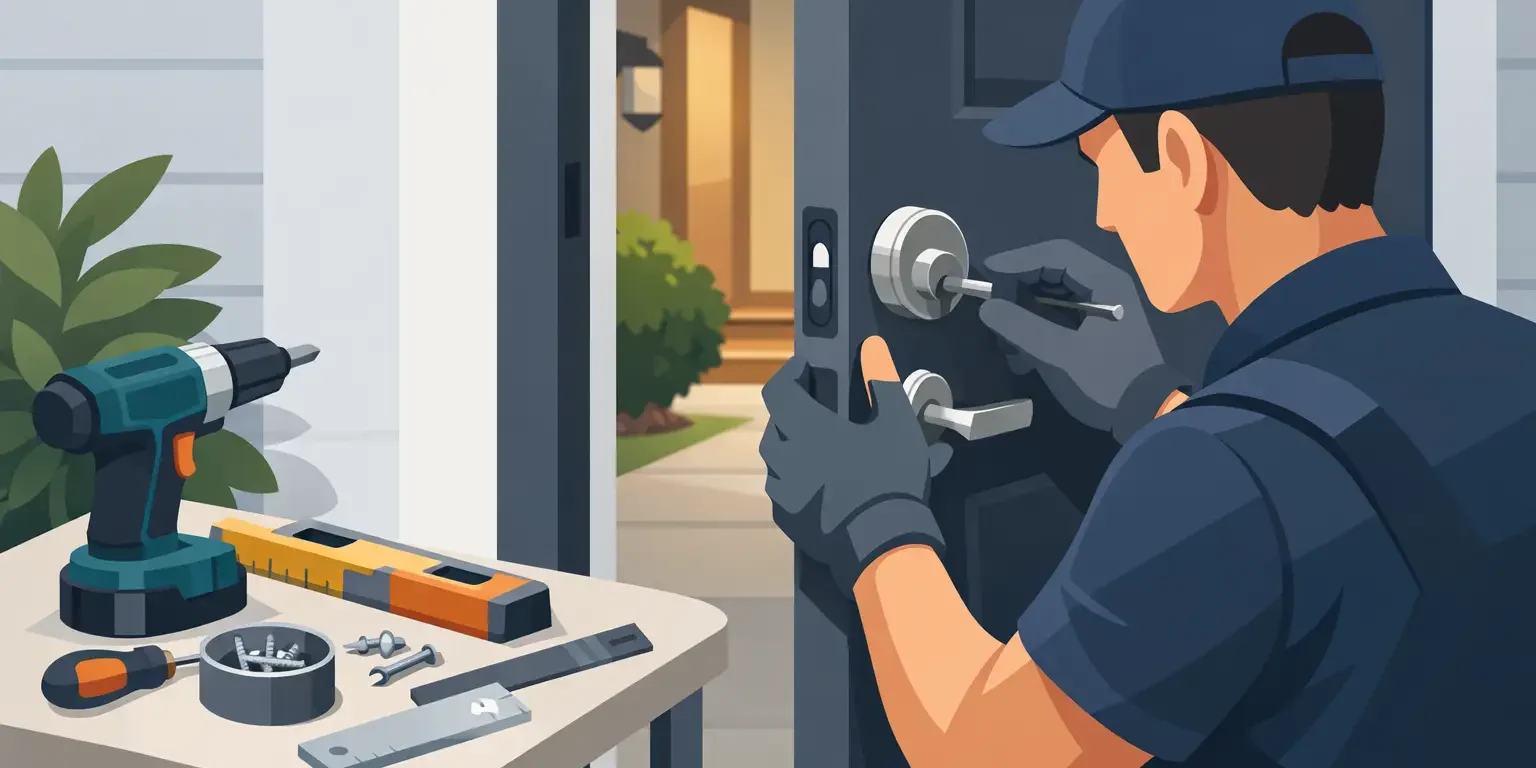
A loose latch and a basic knob lock might seem fine until the door gets forced, the frame shifts, or a key stops turning when you need it most. Front door deadbolt installation is one of the simplest upgrades you can make to improve home security, but the quality of the hardware and the way it is installed matter just as much as having a lock on the door at all.
For homeowners in Ballwin and across the St. Louis area, the goal is usually straightforward: make the front entry harder to defeat, easier to use, and reliable day after day. That sounds simple, but there are a few details that separate a solid deadbolt setup from one that only looks secure from the outside.
Why front door deadbolt installation matters
Your front door is the most used entry point in the house, which also makes it the most exposed. Package deliveries, visitors, service calls, school pickup, dog walks, and daily traffic all put wear on the lock, strike plate, hinges, and frame. If the only locking point is the handle set, you are relying on hardware that was never designed to provide the strongest resistance against forced entry.
A properly installed deadbolt adds a second, stronger locking point higher up on the door. That matters because the bolt extends deeper into the frame and is built to resist prying and kick-in attempts better than a spring latch. It also helps stabilize the door when the fit is slightly off due to seasonal swelling, settlement, or older construction.
That said, not every deadbolt installation delivers the same level of protection. A quality lock installed into a weak frame can still fail. A good door with bargain hardware can still be vulnerable. Real security comes from how the lock, door, and frame work together.
What a good deadbolt installation should include
A lot of people focus only on the lock brand or finish. Those things matter, but they are not the whole job. Good front door deadbolt installation starts with evaluating the door thickness, backset, bore hole size, cross bore alignment, latch preparation, and the condition of the jamb.
If the door is already drilled for a deadbolt, the installer should still check alignment carefully. A deadbolt that drags, binds, or only locks when you push or pull the door is telling you something is off. Over time, that extra force wears down the key, cylinder, and internal components.
If the door is not prepped yet, precision matters even more. The bore hole has to be clean and correctly placed. The latch edge needs to be cut so the faceplate sits flush. The strike area on the frame has to line up with the bolt throw. If those details are rushed, the lock may technically work, but it will not operate smoothly or provide the level of security you paid for.
A strong installation also includes the right strike plate screws. Short screws that only bite into the trim are common on builder-grade setups. Longer screws anchored into the framing provide much better holding strength. This is one of the most important parts of the job, and one of the easiest to overlook.
Choosing the right type of deadbolt
Most front doors use either a single-cylinder or double-cylinder deadbolt. A single-cylinder deadbolt uses a key on the outside and a thumb turn on the inside. This is the most common choice for residential entry doors because it is convenient and generally easier for everyday use.
A double-cylinder deadbolt requires a key on both sides. In some situations, property owners consider this style for doors with nearby glass, since someone could otherwise break the glass and reach the thumb turn. The trade-off is convenience and safety. If people inside need fast exit during an emergency, a keyed interior can create delays. Local code and fire safety considerations also come into play, so this is not a decision to make casually.
There are also smart deadbolts, which can add keypad access, app control, user codes, and audit features. These can be a strong option for busy households, rental properties, and homes where lost keys are a recurring issue. But smart hardware is more sensitive to door alignment than many people expect. If the deadbolt does not move freely, the motor can struggle and battery life can suffer. Mechanical prep still comes first.
When DIY works and when it does not
Some homeowners are comfortable replacing an existing deadbolt with a new one of the same size. If the door is already correctly bored, the frame is solid, and the new hardware matches the existing prep, a straightforward swap can go smoothly.
Where DIY tends to go wrong is in the details. Slight misalignment gets ignored. The bolt rubs, but still locks, so it seems good enough. The strike opening is too tight, so the door has to be shoved to secure it. Screws are overtightened into soft wood. The lock sits a little crooked because the hole edge splintered. None of those issues may seem urgent on day one, but they shorten the life of the lock and reduce security.
New door prep is another level entirely. Drilling a clean cross bore and edge bore in the correct position takes the right tools and a steady hand. A mistake is not easy to hide on a front door. If the door is metal, fiberglass, or part of a decorative entry system, the margin for error gets even smaller.
For many homeowners, calling a locksmith is less about avoiding effort and more about getting the job done correctly the first time. That is especially true if the door is older, the frame has shifted, or you are also changing keys, upgrading hardware, or adding a smart lock.
Common problems found during installation
A front door deadbolt installation often reveals issues that were already there. The old lock may have been compensating for a sagging door, a split jamb, stripped screw holes, or poor original prep. Once the old hardware comes off, those weaknesses become visible.
Misalignment is the most common problem. The bolt may hit high, low, or off-center in the strike. Sometimes the fix is minor, such as adjusting the strike opening. Other times the frame needs reinforcement or the door hinges need correction so the lock can operate properly.
Worn or damaged wood around the latch and strike is another issue. If the frame is soft, cracked, or previously patched, simply installing a new deadbolt will not solve the bigger problem. The lock is only as dependable as the material holding it.
Older homes can also have nonstandard prep dimensions or doors that have been modified over time. That does not mean a deadbolt cannot be installed. It just means the work may require more fitting, reinforcement, or custom adjustment than a basic hardware package assumes.
What property managers and homeowners should think about
If you own a rental property or manage tenant turnover, deadbolt installation is often part of a larger security update. That may include rekeying, replacing mismatched locks, or standardizing hardware across multiple units. Convenience matters, but consistency matters too. Using dependable products and keeping records of what was installed can save time later.
For homeowners, the decision usually comes down to balancing security, appearance, and ease of use. A premium deadbolt can be worth it for a main entry door that gets constant use. On the other hand, not every home needs the most expensive option on the shelf. The best choice depends on the door condition, who uses it, how often keys are lost, and whether you want traditional hardware or electronic access.
This is where honest recommendations matter. A good locksmith should explain what fits your door, what improves security, and what is unnecessary for your situation. Fast service is important, but so is getting advice that makes sense for the property.
Why professional installation pays off
Professional deadbolt installation is not just about putting hardware on a door. It is about making sure the lock throws fully, the key turns smoothly, the strike holds firmly, and the door secures without force. That level of workmanship helps the lock last longer and perform the way it should.
It also saves time when something is not standard. If the bore hole needs correction, the jamb needs reinforcement, or the smart lock needs to be calibrated after installation, those issues can be handled on-site without leaving the door half-finished.
For customers who want responsive local service, Locks R Us handles front door security upgrades with the same mobile convenience people expect when they need lock changes, rekeying, or emergency locksmith help. The benefit is simple: the work gets done where you are, with hardware that fits your door and installation that supports real day-to-day use.
A front door should lock easily, feel solid, and give you confidence every time you leave or come home. If your current setup sticks, rattles, or relies on an old knob lock alone, this is one upgrade that is worth doing before it becomes urgent.
Stay connected on Facebook for home security insights, front door deadbolt installation recommendations, and reliable locksmith solutions for your property.