
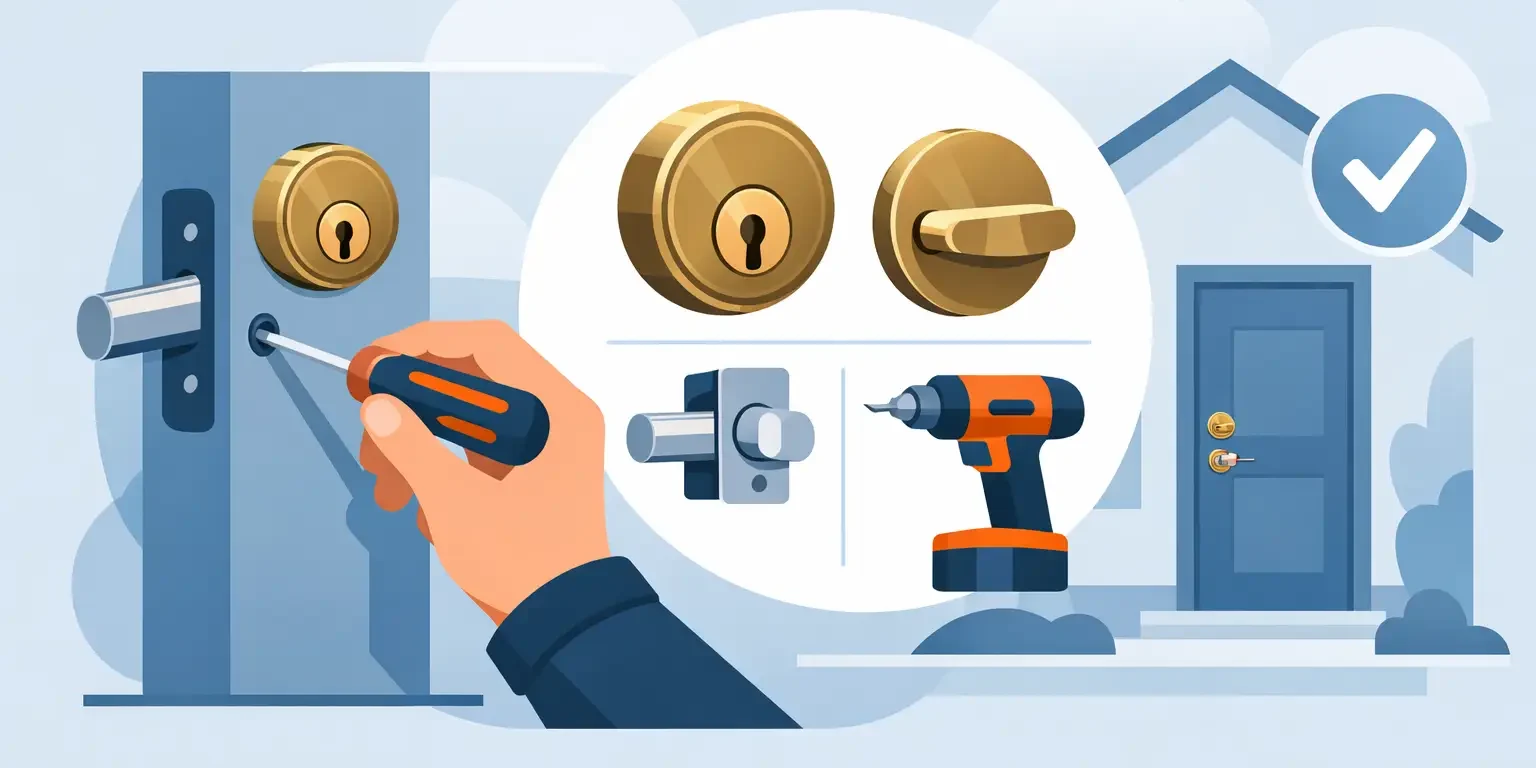
A deadbolt only protects your door if it fits the door, frame, and strike area the right way. If you are searching for how to install deadbolt correctly, the biggest mistake to avoid is treating it like a basic hardware swap. Small alignment problems can leave you with a lock that sticks, loosens, or fails when you need it most.
For many homeowners, the job looks simple until the bolt drags, the key turns roughly, or the door will not latch cleanly afterward. A proper deadbolt install is less about speed and more about accurate measurements, clean drilling, and solid reinforcement at the frame. That is what gives you better security instead of just a new-looking lock.
What matters before you start
Before you open the box, confirm that your door is a good candidate for the deadbolt you bought. Most residential deadbolts are made for standard door thickness and common backset measurements, but not every door is standard. Older homes in Ballwin and across the St. Louis area can have slight variations that affect fit.
Check the door thickness first. Then measure the backset, which is the distance from the edge of the door to the center of the bore hole. Most deadbolts are adjustable for common sizes, but you still need to set the lock correctly before installation. If the deadbolt is set to the wrong backset, the trim may not sit flat and the bolt may not extend as it should.
The door condition also matters. If the door is warped, cracked near the edge, or already misaligned with the frame, installing a new deadbolt will not fix the underlying problem. In those cases, you may need hinge adjustment, frame repair, or a different hardware approach.
Tools and hardware you will likely need
Most installs require a tape measure, pencil, drill, hole saw or spade bit sized to the lock instructions, chisel, screwdriver, wood screws, and a hammer. A level can help, and a utility knife is useful for scoring around faceplates before chiseling.
If you are replacing an existing deadbolt with the same size hardware, the job is usually easier. If you are cutting a new bore hole in a door that never had a deadbolt, precision matters much more. One bad measurement can leave visible damage or a weak fit.
How to install deadbolt correctly on a standard door
Start by marking the deadbolt height. Many installers place a deadbolt around 6 to 12 inches above the knob or lever, depending on the door layout and user preference. If you are replacing an old deadbolt, use the existing hole only if it is clean, centered, and compatible with the new lock.
Next, mark the center point for the cross bore on the face of the door and the edge bore on the side of the door. Use the template provided with the lock whenever possible. Templates reduce guesswork and help keep the bolt centered.
Drill the cross bore carefully from both sides if needed to reduce splintering. Then drill the edge bore for the latch or bolt assembly. Clean, straight holes matter because the bolt must move freely without rubbing the inside of the door.
Once the holes are drilled, fit the bolt into the edge bore and trace around the faceplate. Remove it, score the outline, and chisel a shallow mortise so the faceplate sits flush with the door edge. If it sits proud, the door may bind. If you cut too deep, the hardware can feel loose.
After that, insert the bolt assembly. Make sure the word “up” is actually facing up if the manufacturer marks it that way. This sounds obvious, but it is a common installation error. The bolt should slide straight in and out with hand pressure before you attach the exterior and interior trim.
Mount the key side on the exterior, then align the interior assembly and connect the screws. Tighten the screws evenly. Overtightening can pinch the mechanism and make the key hard to turn. You want the lock secure, but not forced out of alignment.
Before moving to the strike side, test the deadbolt several times with the door open. Turn the thumb turn and key to make sure the bolt throws fully and retracts smoothly. If it does not, stop there and check the bolt orientation, trim alignment, and screw tension.
The strike plate is where security is won or lost
A lot of people focus on the deadbolt body and ignore the frame. That is a mistake. The strike plate and the wood behind it do much of the real work during forced entry attempts.
Close the door slowly and mark where the bolt meets the frame. Install the strike plate so the bolt enters cleanly without scraping. If the bolt hits high, low, or off-center, forcing it into place will only create long-term problems.
Chisel the strike recess so the plate sits flush. Then drill a deep enough pocket for the deadbolt to extend fully into the frame. A bolt that only partially extends does not provide the same level of security.
Use long screws at the strike plate when appropriate, ideally long enough to reach deeper framing rather than only the surface jamb. That extra anchoring can make a major difference in how well the assembly holds up. Many lock kits include short screws for convenience, but stronger frame attachment is usually the better choice for exterior doors.
Common problems after installation
If the key is hard to turn, the issue is often alignment rather than a defective lock. The door may be sagging slightly, the strike opening may be off-center, or the lock body may be under pressure from overtightened screws.
If the bolt sticks only when the door is closed, look at the strike first. If it sticks even with the door open, inspect the lock assembly in the door itself. Sometimes the bore hole has rough edges or the bolt was installed slightly crooked.
Loose interior trim usually points to improper screw tension or a poor fit against the door surface. If the deadbolt feels wobbly, remove it and inspect whether the holes are oversized or the door material is damaged.
Weather changes can also affect fit. In Missouri, seasonal humidity and temperature swings can cause wood doors to expand or shift enough to make a once-smooth deadbolt drag. That does not always mean the lock was installed wrong, but it does mean the alignment should be checked again.
When a replacement is simple and when it is not
If you are swapping out a standard single-cylinder deadbolt for another standard model with matching dimensions, the project can be manageable for a careful homeowner. The key is taking your time and testing each step before tightening everything down.
It gets more complicated when you are upgrading to a high-security deadbolt, installing on a metal door, adding a deadbolt where there was none before, or correcting an older bad installation. Smart deadbolts also add another layer of setup because the mechanical fit still has to be right before any electronic features will work reliably.
Rental properties and commercial doors deserve extra caution as well. Fire code requirements, door closer tension, and hardware compatibility can affect what type of lock should be installed and how it should be positioned.
How to know if you should call a locksmith
Knowing how to install deadbolt correctly is one thing. Knowing when not to force a DIY repair is just as important. If the door is misaligned, the frame is damaged, the holes do not match the new hardware, or the lock still binds after adjustment, professional service can save time and prevent a bigger repair.
A locksmith can also help when security is the main goal, not just replacement. That includes reinforcing the strike area, matching the deadbolt to existing house keys, choosing a better grade of hardware, or installing a deadbolt that works with a handle set or smart lock system.
For homeowners and property managers, that can mean less trial and error and a more dependable result. A mobile locksmith like Locks R Us can do that work on-site, which is helpful when you need the door secured quickly without another trip to a hardware store.
A well-installed deadbolt should feel boring in the best way. It should lock smoothly, line up cleanly, and work the same way every time you use it. If it takes force, guesswork, or repeated adjustment, something is off – and fixing it now is better than trusting your security to a bad fit.