
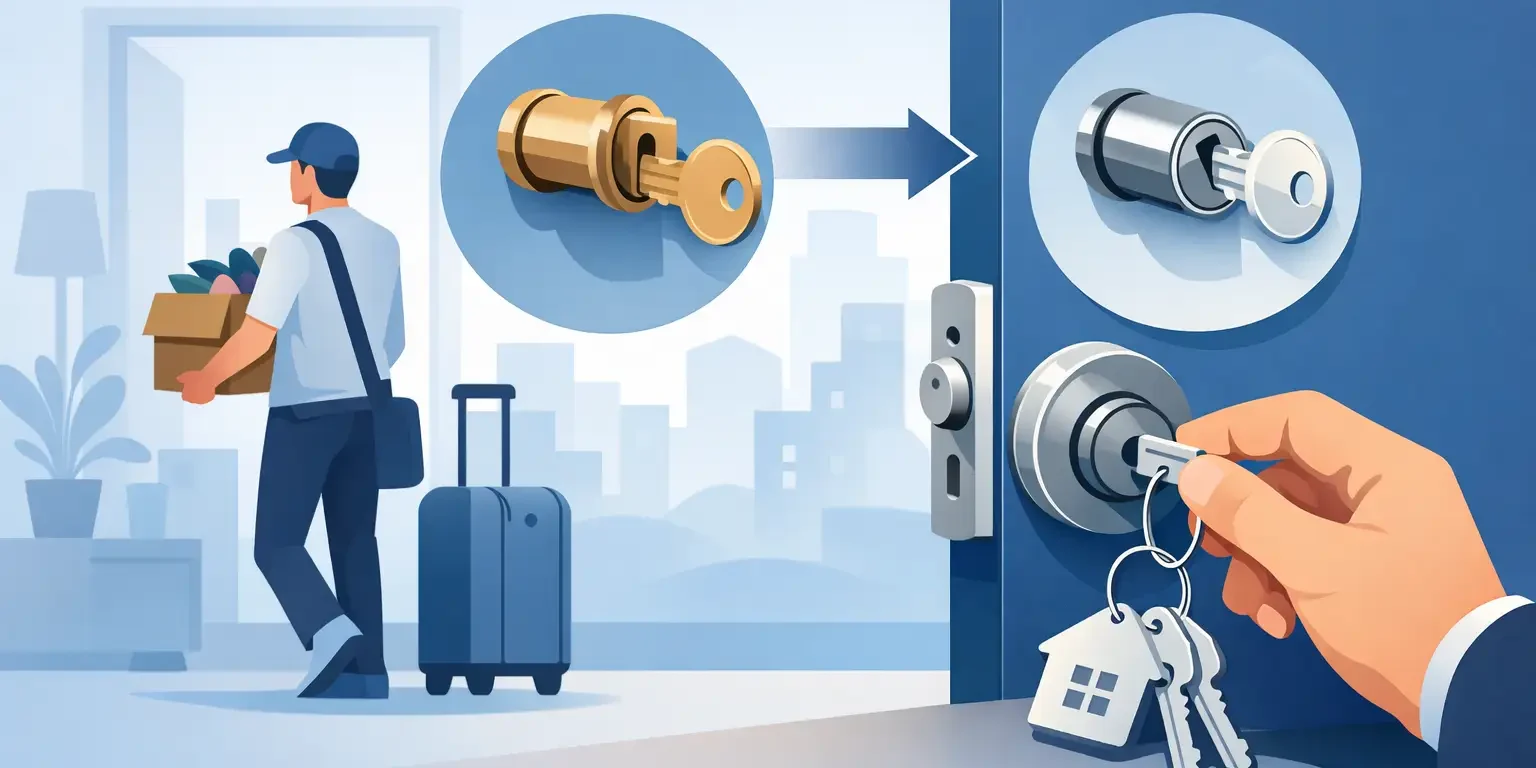
The old tenant is gone, the keys are supposedly returned, and the unit looks ready for cleaning. That does not mean the property is secure. Tenant move out lock changes are one of the first jobs landlords and property managers should handle after turnover, because key control is almost never as clear as it seems.
A former tenant may have given a spare to a relative, dog walker, contractor, or roommate who was never on the lease. Keys may have been copied at a hardware store with no record. Even when the move-out is friendly, you are still relying on assumptions if you do nothing. For rental owners in Ballwin, St. Louis, and surrounding areas, that is a risk that can lead to break-ins, liability concerns, and a hard conversation with the next tenant.
Why tenant move out lock changes matter
Security between tenants is not just about caution. It is basic property protection. Once possession changes, you need to know exactly who has access to the home, apartment, office, storage room, or common area. If you cannot account for every key ever made, you do not really have control of the locks.
There is also the issue of tenant confidence. New renters notice details. If they ask whether the locks were changed and the answer is vague, that does not inspire trust. A fresh lock setup or a professional rekey gives them reassurance that the property was prepared properly.
For property owners, there is a practical side too. Turnovers are already busy. You may be coordinating paint, cleaning, carpet work, inspections, and leasing. Lock service is one of the fastest ways to remove uncertainty from that process. Once it is handled, you know the access point is under control.
Rekey or replace after a tenant moves out?
This is where many landlords pause, because the right answer depends on the condition of the hardware and your long-term plan for the property.
Rekeying changes the internal pins in the existing lock so the old key no longer works. In many turnover situations, this is the most efficient option. If the lock is in good condition, from a reliable brand, and worth keeping, rekeying is usually faster and more affordable than full replacement. It restores key control without changing the entire lockset.
Replacing the lock makes more sense when the hardware is worn out, damaged, low quality, mismatched, or no longer fits your security standards. If the deadbolt is loose, the knob is unreliable, or the lock has been forced in the past, replacement is often the better call. This is also a good time to upgrade from basic hardware to stronger deadbolts or to move toward restricted key systems or smart locks.
In other words, tenant move out lock changes do not always mean throwing everything away. Sometimes a professional rekey is the smartest choice. Sometimes replacement saves you from repeat service calls a month later.
Signs the locks should be changed, not just rekeyed
Some turnover scenarios point clearly toward full replacement. If the lock sticks, binds, or feels loose, the issue may be mechanical wear rather than key control alone. If the strike plate is misaligned or the door frame is damaged, security may be compromised even if the key turns.
Another red flag is bargain-grade hardware that has not held up well over time. Rental properties often go through years of heavy use, and cheap locks show it. A new tenant should not start their lease with a front door that already feels unreliable.
You may also want replacement when different doors use different keys with no clear system. Standardizing the property can make future turnovers easier, especially for landlords managing several units. Better key management now often means fewer headaches later.
What landlords should do right after move-out
As soon as a tenant leaves, treat the property as if unauthorized copies may still be out there. That does not mean the former tenant did anything wrong. It just reflects how keys work in the real world.
First, collect all returned keys, fobs, mailbox keys, garage remotes, and access devices. Then compare what came back to what was originally issued, if you have records. If anything is missing, do not wait. Arrange lock service before the unit is shown or reoccupied.
It is also smart to check every exterior door, side entry, garage access door, and any interior door that protects storage, maintenance areas, or shared spaces. On some properties, one overlooked secondary door becomes the weak point. A locksmith can identify whether the existing hardware is still serviceable or whether upgrades make more sense.
Smart locks and rental turnovers
Smart locks can simplify turnover, but they are not automatically the best fit for every rental. For some single-family homes or small residential properties, electronic locks make access management easier. Codes can be changed between tenants without rekeying each time, and some models allow temporary access for cleaners, maintenance staff, or showings.
That said, the hardware still needs to be installed correctly, and not every property benefits from going electronic. Battery maintenance, tenant misuse, weather exposure, and compatibility with the door all matter. If the lock is installed poorly or the wrong model is chosen, convenience can quickly turn into service calls.
For many landlords, the best setup is a quality mechanical deadbolt on some properties and a dependable smart lock on others. It depends on the building, the tenant profile, and how the property is managed. The point is not to chase technology. It is to maintain secure, dependable access control.
Commercial spaces need a different approach
When a tenant moves out of a commercial unit, the lock decision is often more complex than it is for a house or apartment. Business spaces may involve storefront doors, rear entries, offices, file rooms, alarm tie-ins, panic hardware, and master key systems. If one suite was part of a larger keying structure, changing one lock may affect more than one access point.
This is where a professional assessment matters. Rekeying a commercial space without understanding the broader system can create confusion for owners, maintenance teams, and new occupants. If the building uses master keys, restricted keyways, or electronic access, turnover should be handled with a plan rather than a quick patch.
Why fast mobile service matters during turnover
Vacant units attract attention. The longer a property sits between tenants without confirmed lock control, the more exposure you have. That is why many landlords prefer a mobile locksmith who can come directly to the property, handle the hardware on site, and keep the turnover moving.
Quick response matters, but so does honest guidance. You do not want to be sold full replacements when rekeying would do the job, and you do not want someone to rekey worn-out locks that should have been replaced. A dependable locksmith should explain the condition of the hardware, give practical options, and complete the work cleanly.
For local owners and managers, that on-site convenience can save a day of delays. It also makes it easier to secure multiple doors in one visit, whether the property is in Ballwin, St. Louis, or another nearby part of the metro area.
How to make future turnovers easier
Every move-out is easier when the property has a lock plan in place before the lease ends. Standardizing lock brands across units, keeping clear key records, and replacing poor-quality hardware before it fails can reduce emergency calls and rushed decisions.
If you manage several properties, ask whether your setup supports efficient rekeying, better key tracking, or master key organization where appropriate. If you own a single rental home, focus on durable hardware and simple, repeatable service at each turnover. The best approach is the one you can actually maintain.
A lot of landlords wait until there is a problem – a missing key, a former tenant dispute, a lockout, or a break-in scare. It is better to handle security at the routine turnover stage, when you still control the timeline and the cost.
When a tenant moves out, the locks should not be an afterthought. They are one of the few parts of turnover that directly affect security on day one for the next occupant. If you address them promptly and choose the right fix for the property, you start the next lease with fewer unknowns and a lot more confidence.