
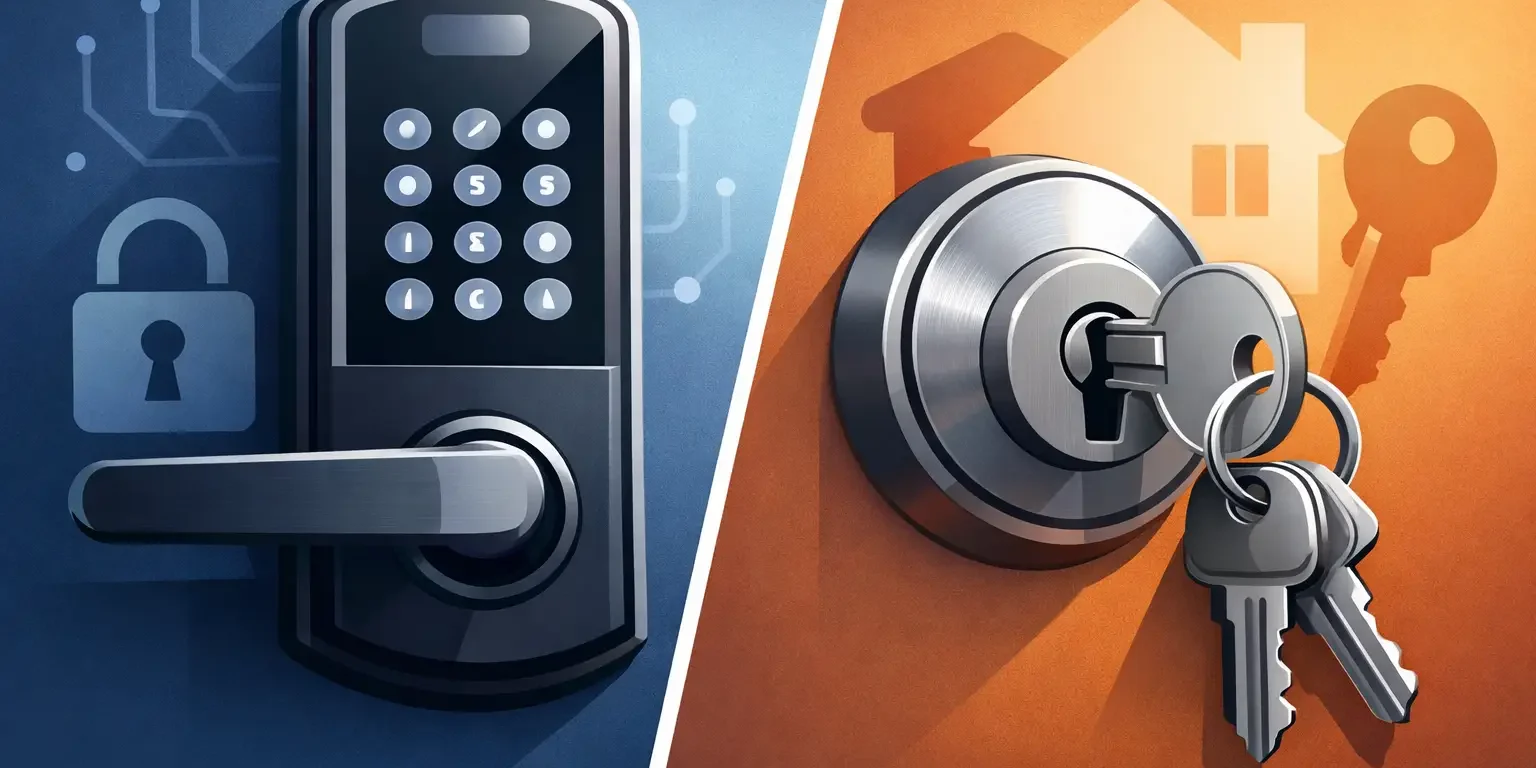
A front door that sticks at 10:30 p.m., a tenant turnover on Friday, or a business that needs better access control by Monday – those are the moments when the keypad lock vs key lock question stops being theoretical. The right choice depends on how you use the door, who needs access, and how much convenience you want without giving up dependable security.
For many property owners in Ballwin and the St. Louis area, the answer is not simply newer versus older. Traditional key locks still make sense in a lot of situations. Keypad locks can be a strong upgrade when access changes often or when carrying keys is a hassle. The better option comes down to daily use, maintenance expectations, and the level of control you need.
Keypad lock vs key lock: the core difference
A key lock is mechanical. You insert a physical key, turn it, and the lock opens if the key matches the cylinder. It is simple, familiar, and widely used on homes, offices, and exterior doors.
A keypad lock replaces or supplements the key with a code. Some models are fully electronic, while others include both a keypad and a backup keyway. Instead of handing out multiple keys, you can share a code or assign separate user codes depending on the model.
That difference changes more than convenience. It affects rekeying needs, lockout risk, battery maintenance, user access, and how quickly you can respond when someone should no longer have entry.
When a key lock is the better choice
A standard key lock is often the right fit when you want proven hardware with fewer electronic parts. Good mechanical deadbolts from trusted brands remain a solid option for many homes and businesses, especially when reliability and lower upfront cost matter most.
For homeowners, key locks work well when only a few people need access and spare keys are easy to manage. If your household keeps track of keys and you do not mind carrying one, a traditional lock may be all you need. It is also a strong choice for gates, storage areas, detached buildings, and other locations where simple hardware is preferable.
Property managers and business owners also still rely on key locks when they want systems that can be rekeyed, pinned into a master key setup, or standardized across multiple doors. Mechanical locks are straightforward to maintain and often easier to match with existing hardware.
There are trade-offs, of course. Keys can be copied, lost, or not returned. If a tenant moves out with a working key, or an employee leaves without turning one in, you may need rekeying or full lock replacement. That is where a basic lock can become less convenient over time.
Best reasons to choose a key lock
Key locks make the most sense when durability, simplicity, and lower installation cost are the priority. They are also ideal when electronic features are unnecessary or when the door gets limited traffic from a small number of authorized users.
When a keypad lock makes more sense
A keypad lock is usually the better choice when access changes often. That is why landlords, Airbnb hosts, office managers, and busy households tend to like them. Instead of tracking who has which key, you can update a code and move on.
For residential use, keypad locks are convenient for families with kids, dog walkers, house cleaners, or visiting relatives. You do not need to hide a spare key under a mat or worry about someone being locked out without one. For commercial use, they help control access without cutting new keys every time staffing changes.
A keypad lock can also reduce the hassle after a move or tenant turnover. Rather than rekeying because too many keys may still be out there, you can simply delete old access codes on the right model. That does not replace all security planning, but it can speed things up.
The trade-off is maintenance. Electronic locks need batteries, proper installation, and occasional troubleshooting. If the keypad fails, batteries die, or the lock is installed incorrectly, convenience disappears fast. That is why product quality and professional setup matter.
Best reasons to choose a keypad lock
Keypad locks are strongest when convenience, flexible access, and quick code changes matter more than keeping everything purely mechanical. They are especially useful on primary entry doors, rental properties, and offices with multiple users.
Security differences that matter in real life
People sometimes assume electronic means more secure. That is not always true. Security depends on the specific lock, how it is installed, the quality of the door and frame, and whether the hardware fits the risk level of the property.
A cheap keypad lock is not automatically safer than a high-quality deadbolt. On the other hand, a well-made electronic lock with strong programming features can offer better control than a basic keyed entry, especially if you need to remove access quickly.
With key locks, the main vulnerability is key control. If too many copies exist, your security weakens. With keypad locks, the main vulnerability is code management. If users share codes carelessly or never change them, the benefit drops.
For exterior doors, the strongest setup is often a professional deadbolt installation installed correctly into a solid door and reinforced frame. Whether that deadbolt uses a key or keypad matters, but not as much as many people think if the hardware itself is poor or the strike plate is weak.
Cost: upfront versus long-term value
In a straight purchase comparison, a key lock usually costs less than a keypad lock. Mechanical hardware is often cheaper to buy and simpler to install, especially if you are replacing an existing lock with a similar model.
A keypad lock costs more upfront, and advanced models can cost substantially more. But in some situations, it can save money later. If you regularly rekey units, replace lost keys, or need frequent access changes, the extra cost may be worth it.
For a single-family home with stable access, a key lock may offer the better value. For a rental, office, or household with frequent visitors and service providers, a keypad lock may pay off in convenience and fewer service calls for key-related issues.
Which lock is better for rentals and businesses?
This is where the keypad lock vs key lock decision often gets easier. If people come and go often, keypad locks usually have the advantage. Property managers can change codes between tenants, and businesses can remove access without collecting every physical key first.
That said, many commercial properties still benefit from keyed systems, especially when they need master keying, durable commercial-grade cylinders, or code compliance with existing hardware. In some cases, the best answer is a mixed setup: mechanical hardware on some doors, keypad access on others.
For example, an office might use keypad entry on a main staff door while keeping keyed commercial deadbolts on secondary access points. A rental property owner may want keypad locks on unit doors but keyed locks on utility or storage areas. Practical security is rarely one-size-fits-all.
Common problems with each option
Key locks fail in familiar ways. Keys break, locks wear down, cylinders get sticky, and people get locked out. The good news is that these issues are usually straightforward to diagnose and repair.
Keypad locks bring different problems. Dead batteries, worn buttons, programming confusion, weather exposure, and low-quality electronics can all cause trouble. Some homeowners are surprised to learn that installation accuracy matters a lot. If the bolt does not align well with the door frame, the motor strains and the lock may stop working correctly.
That is why hardware selection should match the door, the traffic level, and the environment. A lock that works well on a sheltered residential entry may not hold up the same way on a busy commercial door.
How to choose the right lock for your property
Start with how the door is actually used. If only a couple of people need access and you want the simplest dependable option, a key lock is often the smart choice. If users change often, if lockouts happen regularly, or if you want easier access control, a keypad lock is usually more practical.
Also think about who will maintain it. If you do not want to track batteries, codes, or electronic troubleshooting, stay mechanical. If you value flexibility and are willing to maintain the device properly, a keypad lock can make everyday life easier.
For many customers, the best move is not choosing the trendiest lock. It is choosing the one that fits the property, the traffic, and the security goals without creating new headaches. A professional locksmith can help you compare door compatibility, hardware grade, and whether rekeying, deadbolt replacement, or electronic lock installation makes the most sense.
If you are still weighing the choice, keep it simple: pick the lock that you will actually manage well. The best security upgrade is the one that works reliably on your door, for your people, every day.