
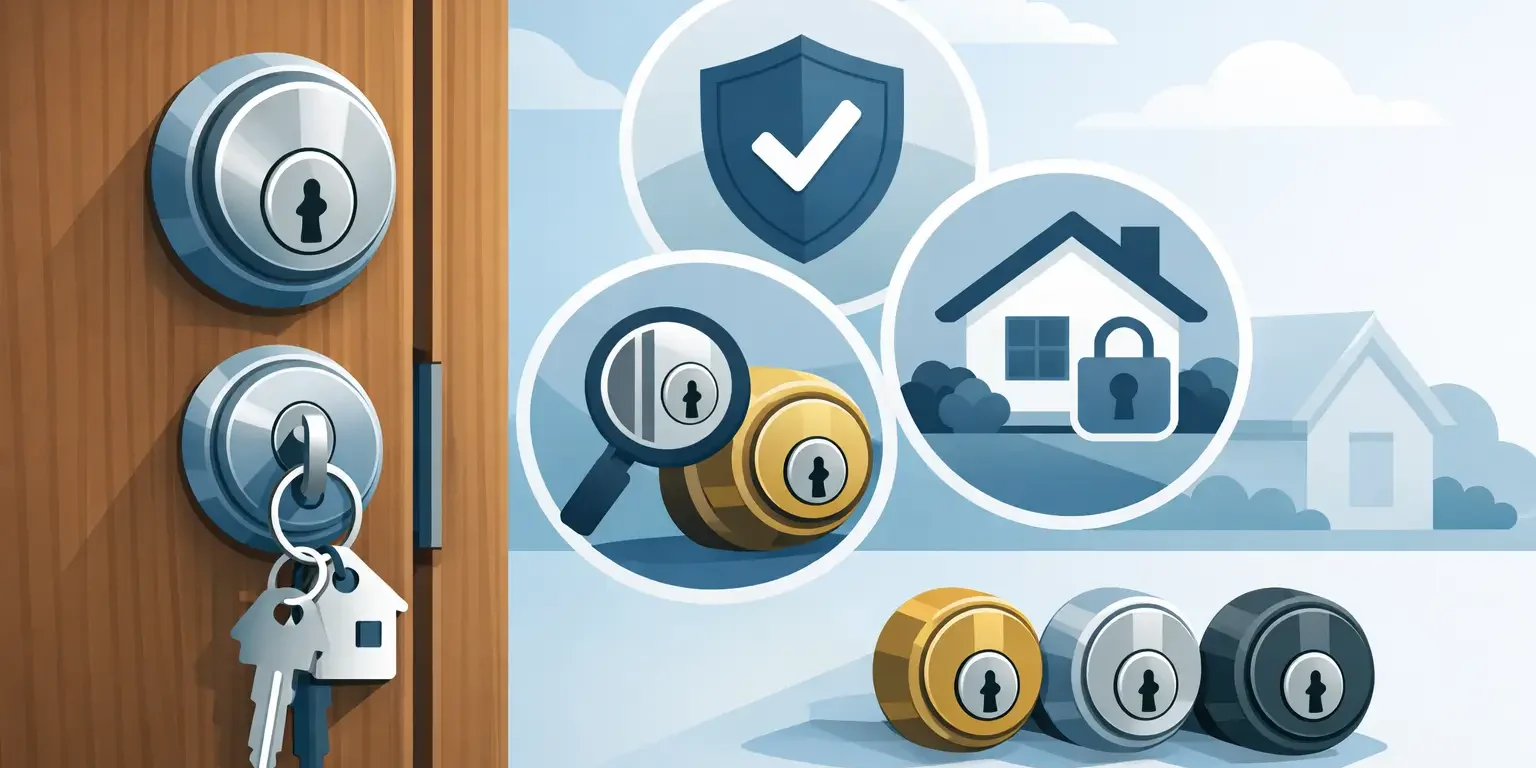
A deadbolt can look solid on the shelf and still be the weak point on your front door. The difference often comes down to its tested grade, the strength of the door frame, and whether the lock is installed correctly. Knowing how to choose deadbolt grade helps you spend money where it actually improves security instead of paying extra for features you do not need.
For most Ballwin and St. Louis homeowners, a quality Grade 1 or Grade 2 deadbolt from a recognized brand is the right place to start. But the best choice depends on the door, the location, who has access, and how much daily use the lock will receive.
How to Choose Deadbolt Grade Using ANSI Ratings
Deadbolt grades are commonly based on ANSI/BHMA testing standards. ANSI is the American National Standards Institute, while BHMA is the Builders Hardware Manufacturers Association. Together, these standards measure how well lock hardware stands up to use, force, wear, and attempted forced entry.
The grade number works backward from what many people expect: Grade 1 is the strongest rating, Grade 2 is a solid middle option, and Grade 3 is the entry-level rating.
A deadbolt grade is useful because it reflects tested performance rather than packaging claims alone. It does not mean a Grade 1 lock makes any door impossible to defeat. A weak strike plate, short mounting screws, damaged frame, or hollow-core door can still compromise the entire setup. Think of the deadbolt grade as one critical part of the security system, not the whole system.
Grade 1: Best for High-Use or Higher-Risk Doors
Grade 1 deadbolts are built for heavy duty use and more demanding security applications. They are commonly selected for commercial locations, rental properties with frequent turnover, offices, and residential exterior doors where homeowners want the highest available mechanical rating.
These locks generally undergo more demanding testing for bolt strength, impact resistance, cycle life, and operation. A Grade 1 deadbolt can be a smart investment for a rear door hidden from street view, a door connected to an attached garage, or a business entrance that sees regular traffic.
The trade-off is cost. Grade 1 hardware is usually more expensive, and some models have a more commercial appearance. For a homeowner, that extra expense is worthwhile when the door is a major entry point, has a history of lock problems, or needs to hold up to constant use.
Grade 2: The Practical Choice for Most Homes
Grade 2 deadbolts provide dependable residential security and are often the best balance of price, appearance, and durability. Many quality residential deadbolts from trusted manufacturers carry this rating.
For a typical single-family home with properly secured exterior doors, Grade 2 hardware is often more than adequate. It is a strong choice for front doors, side doors, garage entry doors, and rental homes when paired with a reinforced strike plate and correct installation.
Do not assume every lock that looks similar is equal. Check the product specifications for the actual ANSI/BHMA grade. Decorative finishes, keyless entry features, or a familiar brand name do not automatically mean the deadbolt has the grade you expect.
Grade 3: Basic Security for Lower-Demand Applications
Grade 3 is the minimum ANSI/BHMA residential level. It may be appropriate for a low-use door, a storage area, or a temporary budget-minded replacement. However, it is usually not the best long-term choice for a primary exterior entry door.
A Grade 3 deadbolt can still be better than no deadbolt at all, but homeowners should understand the limits. If you are replacing a lock after a break-in concern, moving into a new home, or upgrading an older door, stepping up to Grade 2 or Grade 1 usually provides better value over time.
Match the Deadbolt Grade to the Door Location
The front door gets the most attention, but it is not always the most vulnerable entry point. A side or rear door may have less visibility, poorer lighting, or an older frame. Those conditions can justify a stronger deadbolt and frame reinforcement even if the front door has a lower risk.
For a main entry door in good condition, a Grade 2 deadbolt is often a sensible choice. For a secluded rear entrance, a door leading from the garage into the house, or an exterior business door, Grade 1 may be worth the upgrade. Property managers should also consider the amount of tenant traffic and how often locks are rekeyed or replaced between occupants.
If the door itself is warped, loose in the frame, cracked near the latch area, or fitted with a weak strike plate, replacing only the deadbolt will not solve the problem. The lock bolt needs solid material to extend into when the door is closed.
The Strike Plate and Screws Matter as Much as the Lock
A deadbolt is only as strong as the frame holding the strike plate. Many standard strike plates are secured with short screws that only grip the trim or a small portion of the door jamb. Under force, that area can split before the deadbolt itself fails.
For better protection, use a reinforced strike plate installed with long screws that reach the wall framing behind the jamb. This spreads force across a larger area and makes the assembly more resistant to kicking or prying.
Installation also affects how smoothly the deadbolt works. A bolt that rubs the strike plate or requires you to lift the door before locking is under stress every time it is used. Over time, that can damage the lock and make the door less secure. A properly aligned deadbolt should extend and retract without forcing the thumbturn or key.
Choose the Right Cylinder and Key Control
The grade measures the hardware’s tested durability and strength, but it does not tell you everything about the key cylinder. If you are concerned about unauthorized copies of keys, frequent tenant changes, or lost keys, ask about rekeying and key-control options.
Rekeying allows the existing lock to work with a new key, provided the hardware is in good condition and compatible. It is often more affordable than replacing every lock after moving, a staffing change, or a tenant turnover. If the deadbolt is worn, damaged, or a low-grade model you already planned to upgrade, replacement can make more sense.
For businesses and larger properties, a master key system can allow designated keys to open specific doors while limiting access elsewhere. The right setup depends on who needs access, which doors require restricted entry, and how quickly the access plan may change.
Single-Cylinder, Double-Cylinder, and Smart Deadbolts
A single-cylinder deadbolt uses a key outside and a thumbturn inside. It is the standard choice for most homes because occupants can exit quickly without finding a key. A double-cylinder deadbolt requires a key on both sides, which may be considered when glass is close enough to the lock for someone to break it and reach inside.
However, double-cylinder locks can create an emergency exit concern. Local building codes and fire safety requirements may limit where they can be used. Before selecting one, make sure it is appropriate for the door and that everyone in the home understands the exit plan.
Smart deadbolts add convenience through keypad codes, app control, temporary access, and activity alerts. They can be especially useful for rental properties, busy families, and offices. Still, a smart lock should have strong physical hardware. Look at the deadbolt’s ANSI/BHMA rating separately from its electronic features, and make sure the door, strike plate, and installation are equally secure.
When Professional Installation Is Worth It
Deadbolt replacement may appear simple, but incorrect drilling, poor alignment, a mismatched backset, or a weak door frame can reduce the value of even excellent hardware. Professional installation is particularly helpful for older St. Louis-area homes, metal doors, new deadbolt locations, commercial doors, and smart lock upgrades.
A locksmith can inspect the full opening, recommend a grade that fits the risk and budget, reinforce the strike area when needed, and verify that the lock operates correctly. This also avoids choosing a lock that does not fit the existing door preparation.
If you are unsure whether your current deadbolt is strong enough, start with the door you rely on most after dark. A trusted mobile locksmith such as Locks R Us can assess the hardware on-site and help you choose a deadbolt that protects the door, the property, and the people behind it.