
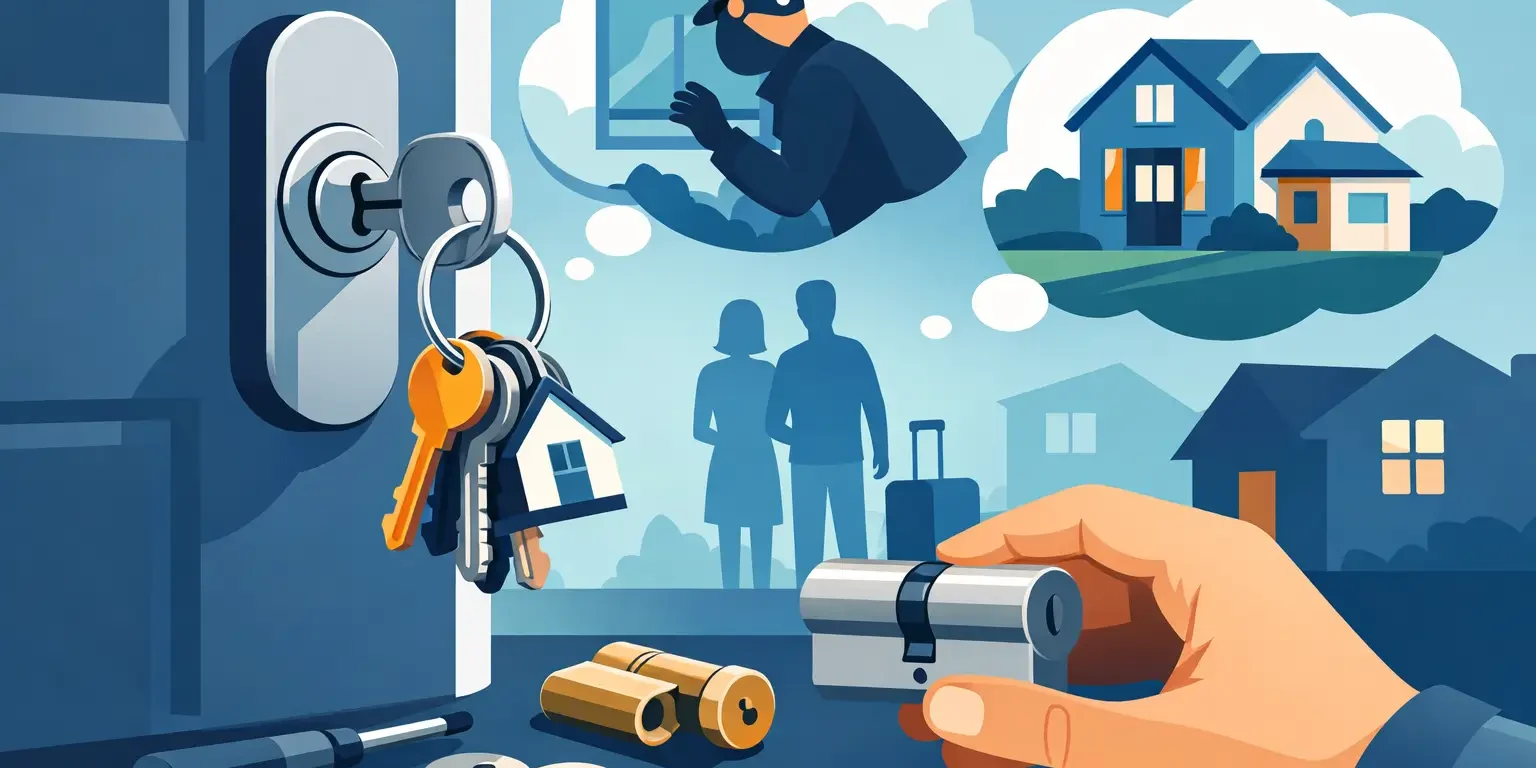
You usually start asking when should you change locks right after something feels off – a missing key, a recent move, a break-in, or a lock that suddenly sticks when you are trying to get inside. In most cases, that instinct is right. If a lock no longer gives you confidence, it deserves a closer look.
For homeowners, landlords, and business owners in Ballwin and the St. Louis area, the real question is not just whether a lock still works. It is whether the right people have access, whether the hardware still holds up under daily use, and whether the level of security still matches the property. Sometimes a full lock change is the best move. Other times, rekeying or repair makes more sense.
When should you change locks after a move?
One of the clearest times to change locks is right after moving into a new home. You may receive two keys at closing, but that does not tell you how many copies are still out there. Previous owners, family members, contractors, house cleaners, dog walkers, or neighbors may still have access.
This is one of the most common situations where people wait too long. They assume the locks are fine because the door closes and the key turns. But physical function is only part of security. If you do not know exactly who has a key, changing or rekeying the locks is a smart first step.
For many homes, rekeying is enough if the existing hardware is in good shape. If the locks are outdated, low quality, or damaged, replacing them may be the better investment. A locksmith can help you decide based on the condition of the lock and your security goals.
After lost keys, stolen keys, or a break-in
If your keys are lost or stolen, lock service should move up your priority list fast. That is especially true if the missing key was attached to anything with your address, vehicle information, or personal identification. Even if you think the keys are probably gone for good, there is still risk in assuming they will never be used.
After a break-in or attempted break-in, changing locks is often the right call, but not always for the reason people think. Sometimes the main issue is obvious damage. The cylinder may be compromised, the deadbolt may not line up properly anymore, or the strike area may be weakened. In other cases, the lock still works, but your confidence in it does not. That matters too.
A break-in is also a good time to look beyond a like-for-like replacement. You may want stronger deadbolts, reinforced strike plates, or smart lock options that give you better control over access. For local property owners, a mobile locksmith can usually assess the door, frame, and hardware together, which helps avoid replacing one weak part while leaving the rest vulnerable.
When the lock is worn out or unreliable
Not every lock problem is dramatic. Some fail slowly. The key starts sticking. You have to jiggle the handle. The deadbolt only works if you pull the door hard first. These are warning signs, not minor annoyances.
Locks wear down from age, weather, frequent use, and poor alignment. In Missouri, seasonal changes can also affect how doors and frames sit, which puts more strain on the lock. A lock that works only when everything is lined up just right is already telling you it is near the end of its useful life.
That does not always mean a full replacement is necessary. Sometimes repair or realignment solves the issue. But if the internal parts are worn, if the hardware is low grade, or if the lock has already been serviced multiple times, changing it often saves money and frustration in the long run.
Tenant turnover and employee changes
For landlords and property managers, lock changes are less about panic and more about control. Every time a tenant moves out, there is a question that needs a clear answer: who still has a key? Even with honest former tenants, key copies can end up with roommates, partners, maintenance vendors, or temporary guests.
That is why many rental property owners rekey or change locks between tenants as a standard practice. It is one of the simplest ways to reduce liability and protect the next occupant. The same principle applies to offices, retail spaces, and commercial buildings after staffing changes, especially if a former employee had broad access.
In commercial settings, this can get more complicated. Some businesses need selective rekeying, master key adjustments, or upgrades to electronic access systems rather than changing every lock on the property. The right solution depends on how the building is used and how many people need controlled entry.
When should you change locks instead of rekeying?
This is where many people get stuck. Rekeying changes the internal pins so old keys no longer work. Changing the lock means replacing the hardware entirely. Both can improve security, but they solve different problems.
Rekeying makes sense when the lock is in good condition, and you mainly need to control who has access. It is often the most efficient option after moving, losing a key, or turning over a rental unit. It is also useful when you want multiple doors to work with one key, if the hardware allows for it.
Changing locks makes more sense when the hardware is damaged, outdated, poor quality, or no longer fits your security needs. If you want to upgrade from a basic knob lock to a proper deadbolt, switch to smart locks, improve durability, or replace mismatched hardware, a full lock change is usually the better route.
There is also a practical middle ground. Some properties need a mix of services. You might rekey a few newer locks, replace one worn exterior deadbolt, and upgrade a back entry to a keypad lock. A good locksmith should recommend what fits the situation, not push a full replacement when a simpler fix will do.
Older locks and outdated security
Sometimes the reason to change locks has nothing to do with a recent event. The lock may simply be old. If your home or business still has builder-grade hardware, loose cylinders, or locks that have been painted over and used for years, it may be time for an upgrade.
Older locks are not automatically unsafe, but age often brings weaker materials, less precise operation, and fewer security features. If your doors protect valuables, sensitive files, tools, inventory, or family members, basic hardware may no longer be enough.
For homes, this often means upgrading entry doors first. For businesses, it may mean reviewing storage rooms, side entrances, and employee-only areas that have been overlooked. Newer lock options can improve key control, resistance to forced entry, and day-to-day convenience.
Smart locks, keypads, and changing needs
You should also consider changing locks when your lifestyle or property use changes. A family with kids coming and going may want keypad access instead of extra key copies. A landlord managing multiple units may want more consistent hardware across properties. A business owner may need better control over employee access without collecting physical keys every time staffing changes.
That does not mean every property needs electronic locks. Traditional deadbolts are still a strong choice in many situations. But if your current setup creates constant hassles, repeated lockouts, or poor access control, changing the locks may be less about emergency response and more about making the property easier and safer to manage.
Do not wait for a complete lock failure
A lot of people wait until they are locked out, dealing with a broken key, or trying to secure a door late at night. By that point, the decision has already been made for them. Planning ahead usually gives you better options, better hardware choices, and less stress.
If you are unsure whether you need repair, rekeying, or full replacement, an on-site evaluation is the fastest way to get a clear answer. A trained mobile locksmith can inspect the hardware, test alignment, and explain what is worth fixing versus what should be changed.
For property owners across Ballwin and greater St. Louis, the best time to act is usually before a small security concern becomes a larger problem. If a lock is damaged, outdated, or tied to uncertainty about who has access, trust that signal and deal with it now. Peace of mind is easier to keep than it is to rebuild.
If your current keys may be unaccounted for, review our lock rekeying service or call to discuss whether rekeying or replacement fits the hardware.